

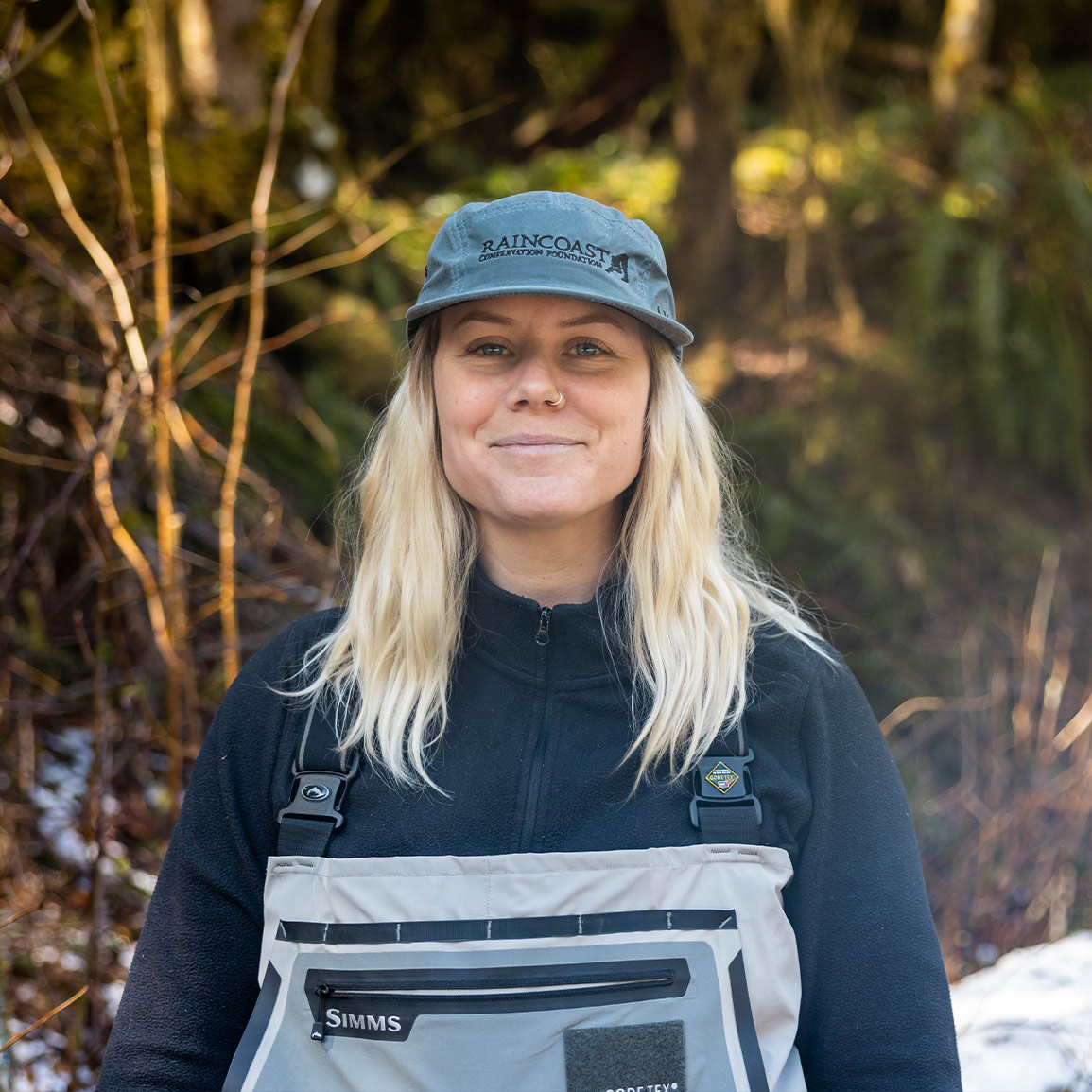
Chelsea Greer, MSc
Biologist and Wolf Conservation Program Director
Chelsea (she/her) is the Director of the Wolf Conservation Program. The focus of her work is to support the protection and conservation of wolves in British Columbia through peer-reviewed research, public education, and wildlife management reform. This includes scientific and ethics-driven initiatives that are working toward the implementation of provincial policy that respects the welfare of wolves and their important role in functioning ecosystems.
Chelsea is particularly interested in the welfare concerns that arise from the lethal management of predators and is an advocate for animal welfare in scientific research. Her research interests also include better understanding predator-prey dynamics in salmon-bearing watersheds and the role wolves play in biodiversity conservation and ecosystem resilience.
Chelsea completed her master’s degree in Geography at the University of Calgary where she studied the behavioural ecology of rewilded Asian elephants in northern Thailand. Her graduate research used a compassionate model of conservation to investigate the rehabilitative and ecological requisites of elephants transitioning from captive to free-living settings. Chelsea also holds a bachelor’s degree from the University of British Columbia where she majored in Applied Animal Biology. It was during this degree that she developed a keen interest in animal ethics and how animal welfare science applies to free living wild populations.
Born and raised in British Columbia, Chelsea enjoys spending her free time hiking the local mountains and scuba diving in the cold waters of the Salish Sea. She has volunteered at various local environmental and animal advocacy groups including the SPCA, Fur-Bearers, Society for Humane Science and Vancouver Aquarium’s Marine Mammal Rescue Center.
Popular articles
Greer C., Walters K.E.. 2022. Landslides, clearcuts, and camera traps: surveilling wolves on an industrial landscape. Raincoast Conservation Foundation. https://www.raincoast.org/2022/06/landslides-clearcuts-and-camera-traps-surveilling-wolves-on-an-industrial-landscape/
Greer C., Genovali, C. 2021. The cull of the wild: management for industry, not wolves. Times Colonist Victoria. https://www.raincoast.org/2022/06/the-cull-of-the-wild-management-for-industry-not-wolves/
Greer C., Walters K.E. 2021. Scat, tracks, and spawning salmon: following signs of wolves along the south coast. Raincoast Conservation Foundation. https://www.raincoast.org/2021/10/scat-tracks-and-spawning-salmon-following-signs-of-wolves-along-the-south-coast/
Recent articles

The Green and Blue Carbon Stewardship opportunity in BC’s forested and marine ecosystems: Synthesis of key workshop takeaways
On March 17, 2021, Transition Salt Spring, Raincoast Conservation Foundation,…

Unpacking new research on the Fraser Estuary’s importance to Chinook salmon
A new paper, “Chinook salmon exhibit long-term rearing and early…

Fraser River juvenile salmon, upstream and in the estuary
Wild Salmon Research Assistant, Paige Roper, shares about Raincoast’s recent…

Guardians of the Coast: The next generation of stewards
In this last session of Coastal Insights, we will be…
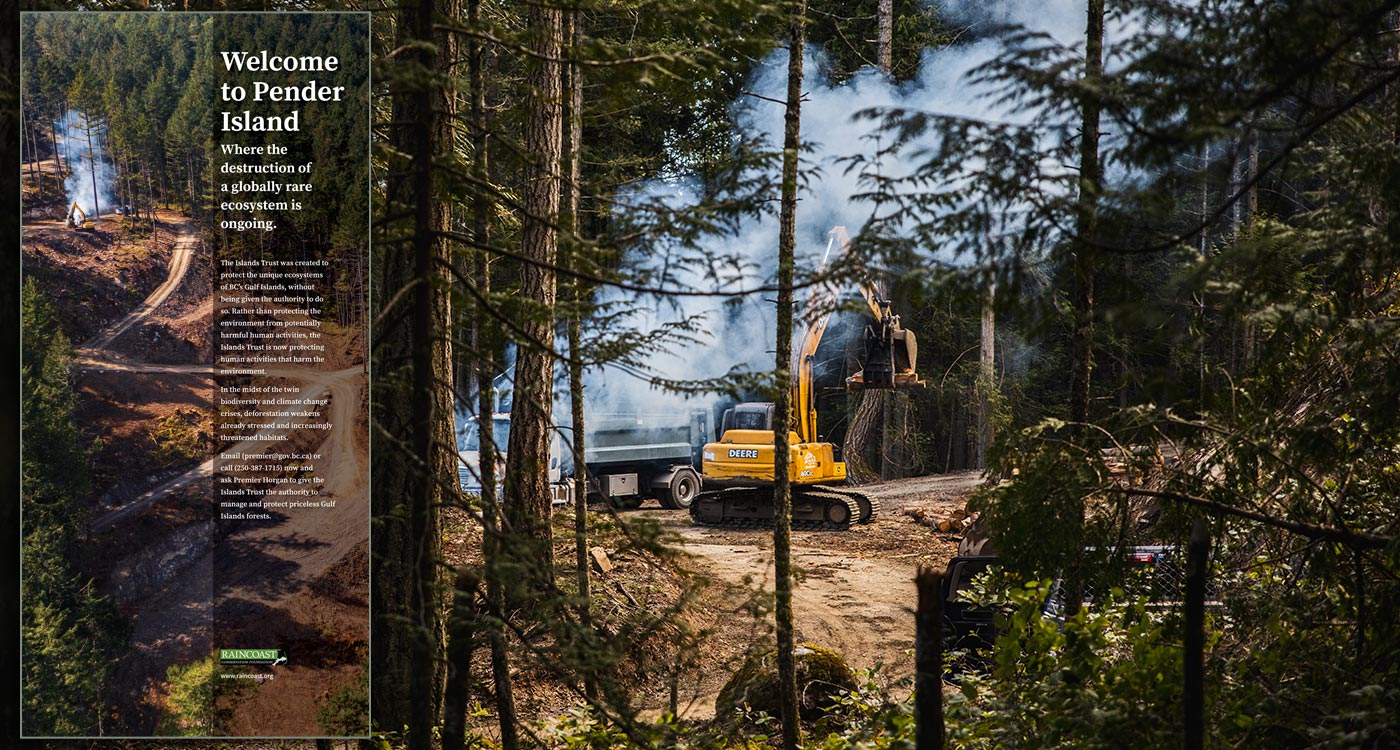
Welcome to Pender Island, where the destruction of a globally rare ecosystem is ongoing
The Islands Trust was created to protect the unique ecosystems…

Southern Resident killer whales need your voice
With the Canadian federal government set to decide on recovery…