Oil and chemical spill tracking

Spills of oil and chemicals into freshwater and ocean environments have killed fish, degraded habitat, and led to closures of commercial, recreational, and Indigenous fisheries. Raincoast’s Healthy Waters Program is positioned to collect data at the scene of a spill and collaborate with various organizations and First Nations to understand the impact of a spill. 

Tracker will host a number of rugged analytical instruments, and enable the measurement of several contaminants in the field, including coliform bacteria, nutrients, metals, pesticides, and tracers of wastewater effluent.
Photo by Peter Ross.
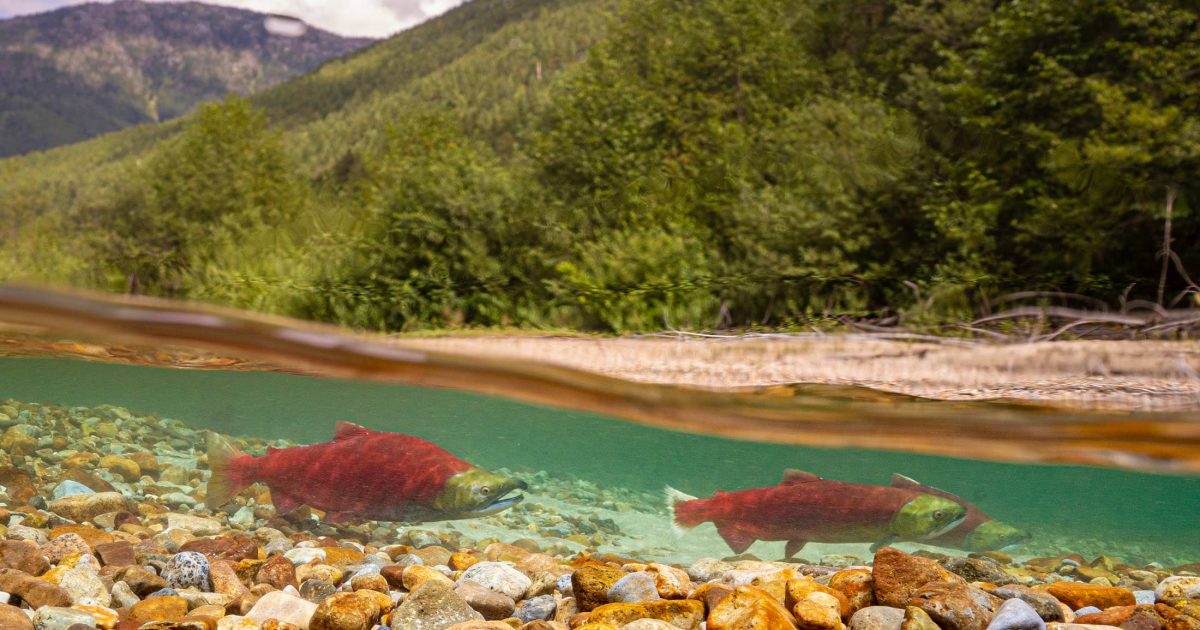
Two sockeye salmon swimming in a river.
Photo by Fernando Lessa.

Spills happen

Spills originate from all manner of accidents. The 2005 train derailment that spilled caustic soda into the Cheakamus River that killed 500,000 fish, The 2015 spill of 3,000 L of Bunker C oil from the MV Marathassa into English Bay. The 2020 fire aboard the MV ZIM Kingston in Juan de Fuca Strait that resulted in the loss of 104 mixed cargo shipping containers into the ocean. Each and every accident is bad news, and threatens the health of fish and whales, and contributes to the degradation of their habitats.

Being prepared is key

Given the sudden and unpredictable nature of oil and chemical spills, our oil and chemical spill response work entails being agile and available for support to First Nations, government agencies, and industry during a major spill. We are developing science protocols, and acquiring sampling kits, field equipment, and safety gear, and are poised to deploy our team to the scene of a spill. 

Being prepared on all fronts is key to limiting the damage from a spill. We recognize that with spills, it’s not a matter of if, but when. Research and monitoring to confirm the origin of the spill, track the fate of the spilled product, and monitor the recovery of ecosystem components routinely fails to be a priority. We will deploy expert capacity where and when needed, and work to prevent harm to valued ecosystem components.
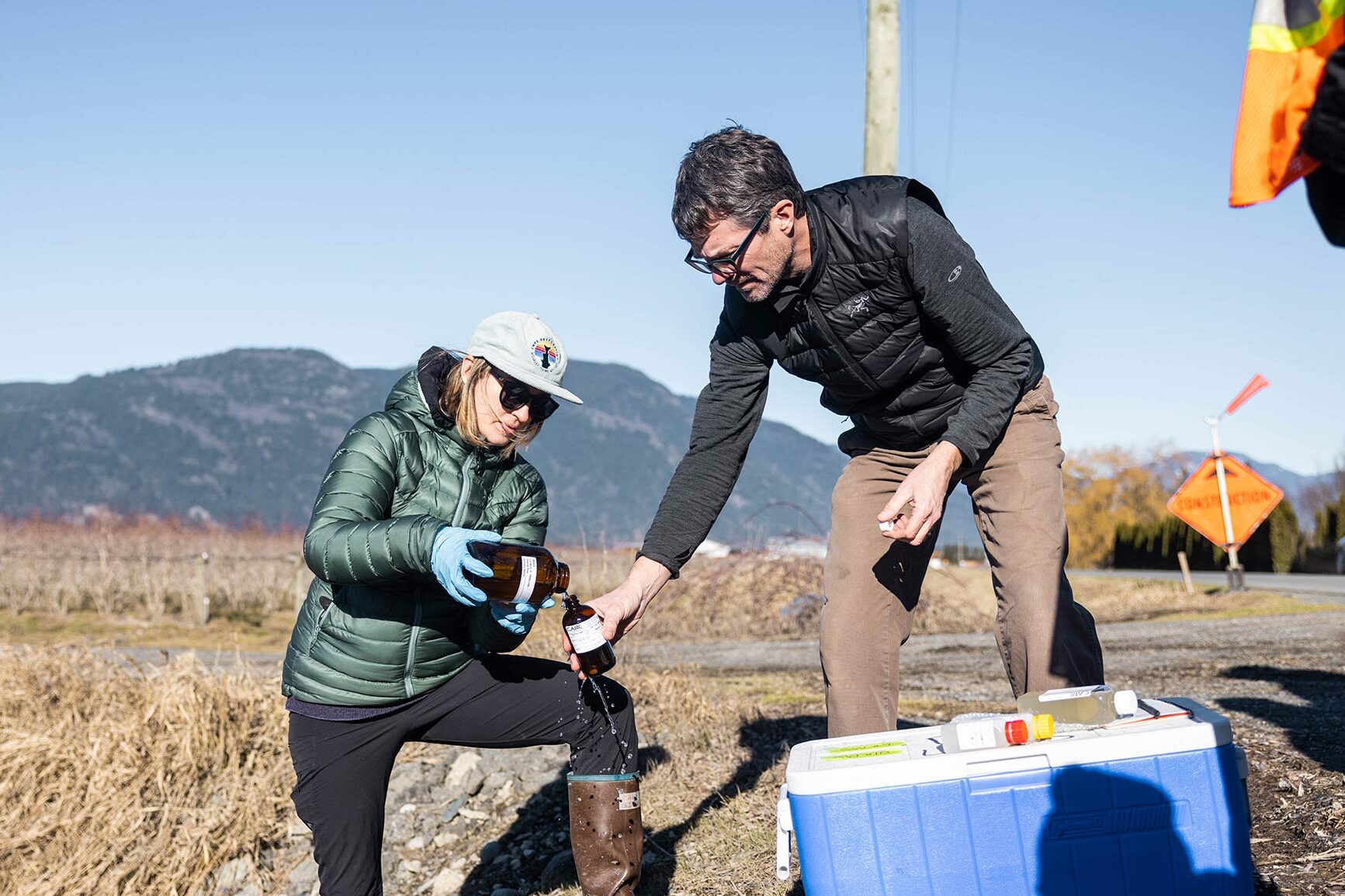
Two people working together to collect water samples in a farm field with the mountains in the background.
Photo by Alex Harris.
https://www.raincoast.org/reports/flood

Semá:th X̱ó:tsa (Sumas Lake) Floods of 2021

The catastrophic floods of late 2021 in southern British Columbia (Canada) and neighbouring Washington State (USA) destroyed homes, farms and businesses, with excess water spilling debris, animal carcasses and diesel fuel into historically productive fish habitat. 

We assembled a team to assess water quality in the former Semá:th X̱ó:tsa (Sumas Lake) area of the Fraser Valley over a seven-week period after the floods. We collected water samples from 11 surface water sites and four groundwater sites for comprehensive contaminant analysis and a subsequent risk-based evaluation. We measured 379 analytes (chemical components and bacteria), including 262 anthropogenic contaminants. We examined excess nutrients, metals, fecal coliform, hydrocarbons, pesticides, pharmaceuticals, and personal care products, perfluorinated compounds, sucralose, and tire-related chemicals.

Recent articles

dummy-img

Wolves would rather fish than hunt, biologists say

The Ottawa Citizen Vancouver Sun Tom Spears Tuesday, September 02, 2008 Wolves would rather fish than hunt, says a new Canadian study that found British Columbia wolves turn up their noses at deer when they can catch spawning salmon. Not only is fish great food, the B.C. biologists found, but it’s also safer for wolves,…
salmon-eating wolves of the Pacific coast

Whose afraid of the big bad wolf? Salmon are

A four-year study of prey remains in wolf droppings and chemical analysis of shed hair shows the predators exclusively eating salmon when the fish was available …
dummy-img

British Columbia wolves have taste for salmon, new study finds

Financial Post Canwest News Service Published: Tuesday, September 02, 2008 A team of biologists has discovered “Canada’s newest marine mammal” — the wolf. A new Canadian study of the feeding patterns of British Columbia wolf packs found that they would rather fish than hunt. The study found that wolves routinely turn up their noses at…
Dead animal in spawning stream

Venison’s fine, but wolves prefer salmon

Wolves are not quite the red-blooded hunters we thought they were. It appears they prefer to dine on a nice piece of salmon rather than …
dummy-img

Oil Futures: We’re in for a whale of a time, one way or another

BY: CHRIS GENOVALI MONDAY MAGAZINE August 27, 2008 The International Union for Conservation of Nature (IUCN) recently released its 2008 list of threatened species of cetaceans (whales, dolphins and porpoises). While this news was reasonably encouraging for the global recovery of populations of humpback whales, these assessments have far-reaching impacts on their conservation management.
Poster image: Applications of Paleolimnology to Sockey Salmon Nursery Lakes and Ecosystems in the Pacific Northwest and Alaska.

Paleolimnology workshop

Institute of Ocean Sciences October 8 and 9th, 2008Hosted by the Raincoast Conservation FoundationWorkshop of the Salmon Nutrient Research Community View the Poster (PDF) Leading scientists in the salmon nutrient and paleolimnology fields reviewed sediment core studies conducted in BC and Alaskan sockeye lakes. The goal of the workshop was to better understand what paleolimnological…
dummy-img

Raincoast examines cougar conservation

View the poster In May 2008, Raincoast presented a conference poster at the Mountain Lion Workshop in Sun Valley, Idaho. The poster, entitled “Cougars in British Columbia: conservation assessment and science-based management recommendations”, includes highlights from a forthcoming report that examines opportunities for cougar conservation.
dummy-img

Migrations

by Ian Jansma, Field Station Coordinator Denny Island, July 2008 A new season has begun at our field research station on remote Denny Island in the Great Bear Rainforest. This part of the world gets up late from its misty winter slumber and rolls slowly over through spring rain toward the summer sun. The days…