

Harvesting immature Chinook is shrinking salmon and reducing future returns, new research finds
Study shows that millennia-old practice of fishing in rivers could restore salmon size.
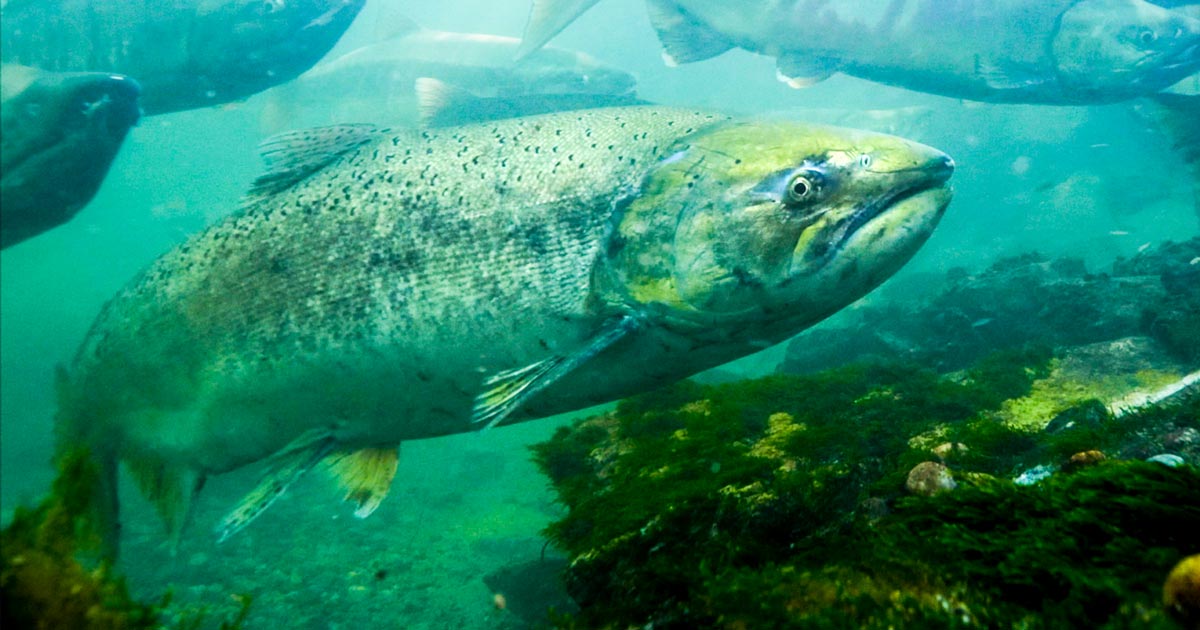
A new study by researchers at the Wild Fish Conservancy and Raincoast Conservation Foundation has found that marine salmon fisheries along the Pacific coast typically harvest Chinook too early in their life cycle, before they reach their full size as adults. The implications from this are far reaching for fisheries, future Chinook runs, and the ecosystem.
The study, published this week in the journal Scientific Reports, examined the effects of “mixed- maturation fisheries,” where both immature and mature Chinook salmon are harvested together in coastal marine waters. This modern fishing practice may be contributing to widespread declines in the age and size of Chinook salmon across the northeast Pacific.
“These fisheries are generally catching salmon before they have the chance to fully grow,” said co-author Misty MacDuffee of Raincoast Conservation Foundation. “Over time, this can lead to younger, smaller Chinook salmon with ripple effects for fisheries, wildlife and future salmon runs.”
Using an innovative model of Chinook salmon that rear in coastal waters, the study found that immature fish can make up to 60% of the Chinook catch in ocean fisheries. In contrast, fisheries that occur in or near spawning rivers–known as terminal fisheries–allow more large, older Chinook to reach their spawning grounds.
The study also found that terminal fisheries can produce a greater harvest weight from landing fewer fish. By targeting only mature adults and allowing immature Chinook to continue growing in the ocean, these fisheries yield larger salmon that not only contribute more weight to the catch, but typically command higher prices per-pound.
“Large Chinook salmon also play an outsized role in both reproduction and the ecosystem,” said lead author Dr. Nick Gayeski. “Older females produce more eggs and larger eggs, and larger Chinook are better able to use high quality spawning habitats not accessible to smaller fish.”
The research provides solutions amid growing concern over declining Chinook abundance and shrinking body size across the Pacific coast, trends that have implications for Indigenous food systems, commercial and recreational fisheries, ecosystem resilience, and recovery of Southern Resident killer whales.