
Plastic pollution

Photo by April Benze.

Plastic pollution is choking our waterways and threatening the health of fish and wildlife. We are collecting plastic and microplastic data as part of our community-oriented water pollution monitoring program. We are collaborating on research projects with universities, governments and experts in the field. We are providing advice to local, regional and federal governments on plastic science, policies, and regulations. We are working with Ocean Diagnostics to support a strong science-based foundation for solutions.


Lots of garbage on a beach.
Photo by Simon Ager.
People working together to take samples of water in jars.
Photo by Alex Harris / Raincoast Conservation Foundation.

Our approach

  • Design a source identification toolbox for plastic pollution; 
  • Working with Indigenous and coastal communities to document plastic pollution and track this back to its source;
  • Conduct research on the source, transport and fate of micro and macroplastics in the environment;
  • Engage in outside-the-box dialogue with industry and governments to support more sustainable design, manufacturing and processes that stem the release of plastics during the life cycle of a product;
  • Support community-oriented outreach and training to support solution-oriented actions and capacity building.

Plastics are everywhere

Plastics from just about every sector can now be found all over the world – from mountain tops to the seafloor, from the Arctic to the Antarctic, and from our homes to the ocean. A modern-day scourge that is blighting remote beaches and shorelines, getting mistaken for food by wildlife, and getting into the foods that nourish us. Whether it’s the structural features of plastic products that suffocate, entangle, or create intestinal blockages – or the endocrine disrupting-contaminants that serve as ingredients of the product (e.g. Bisphenol A or phthalate esters) or as hitchhikers soaked up by plastics in the environment (e.g. PCBs or metals) – plastics are harmful.

Underwater photo of plastic floating near the top of the water.
Chinook salmon swim in a river as seen from head on; epic.
Photo by Fernando Lessa.

The impact on the environment

Without a dramatic re-think, the plastic crisis is here to stay. Despite the best intentions of governments, industry, and consumers to reduce, recycle or re-use, global plastic production continues to enjoy exponential growth. And the unintentional loss to the environment of plastic products and byproducts will continue – plastic bags, bottles, and fishing gear, as well as the discharge of microplastics through domestic and industrial waste. With that will come a constant stream of items that will be mistaken for food but offer zero nutrition, that will entangle wildlife, and will deliver endocrine disruptors to our aquatic food webs. We will document impacts, share findings, and work for change through science, community engagement, and expert advice.

Recent articles

Two people holding a net while doing fish research on a cloudy day

Fraser River juvenile salmon, upstream and in the estuary

Wild Salmon Research Assistant, Paige Roper, shares about Raincoast’s recent work in the Harrison River.
Spirit Bear sleeping in the moss.

Guardians of the Coast: The next generation of stewards
In this last session of Coastal Insights, we will be joined by some of the inspiring young leaders who are taking action in their communities to sustain and protect the coast.
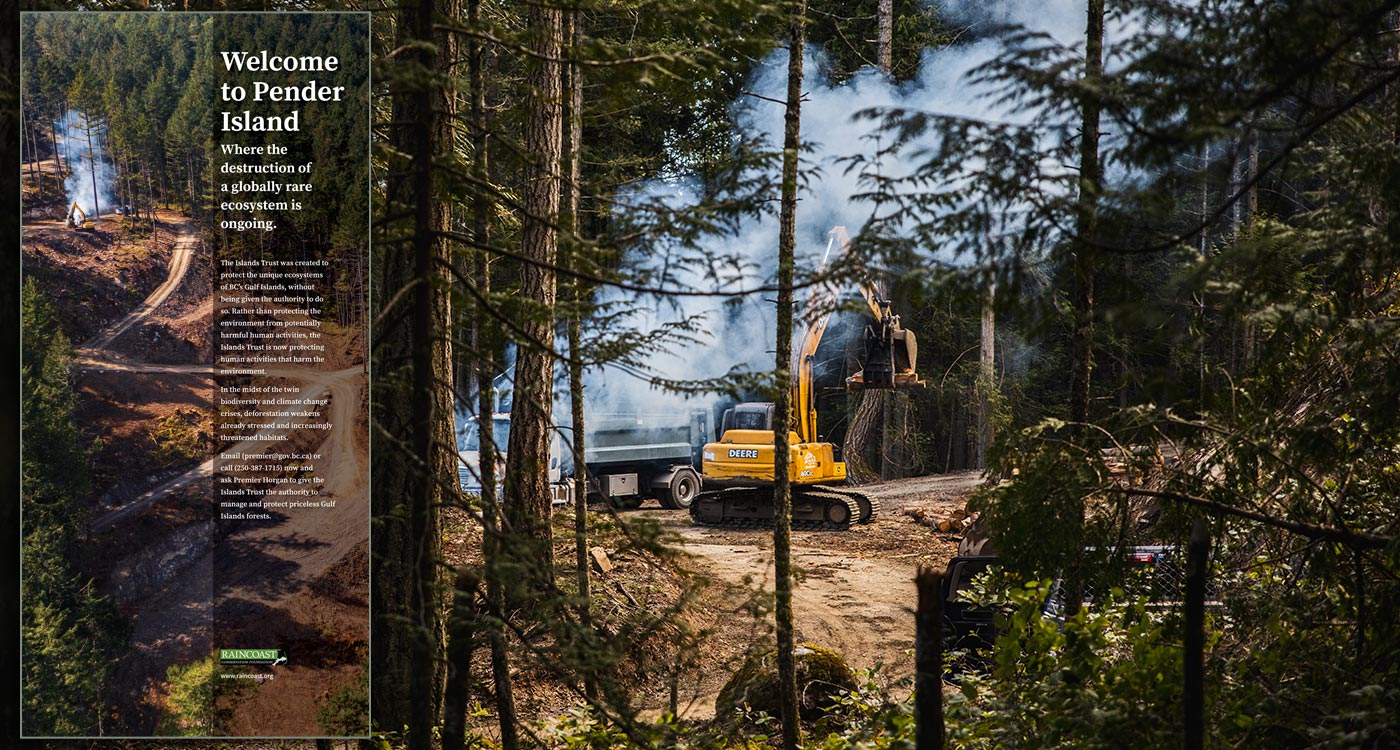
A backhoe works on a cutblock on Pender Island, with remaining trees and smoke scattered around the edge.

Welcome to Pender Island, where the destruction of a globally rare ecosystem is ongoing

The Islands Trust was created to protect the unique ecosystems of BC’s Gulf Islands, without being given the authority to do so. But rather than protecting the ­environment from potentially harmful human activities, the Islands Trust is now protecting human activities that harm the environment.
Southern Resident killer whale at the surface of the water at sunset.

Southern Resident killer whales need your voice
With the Canadian federal government set to decide on recovery measures for 2021, we have made it easy for you to send a letter to three federal ministers encouraging them to implement the strongest possible recovery measures to ensure the survival of Southern Resident killer whales.
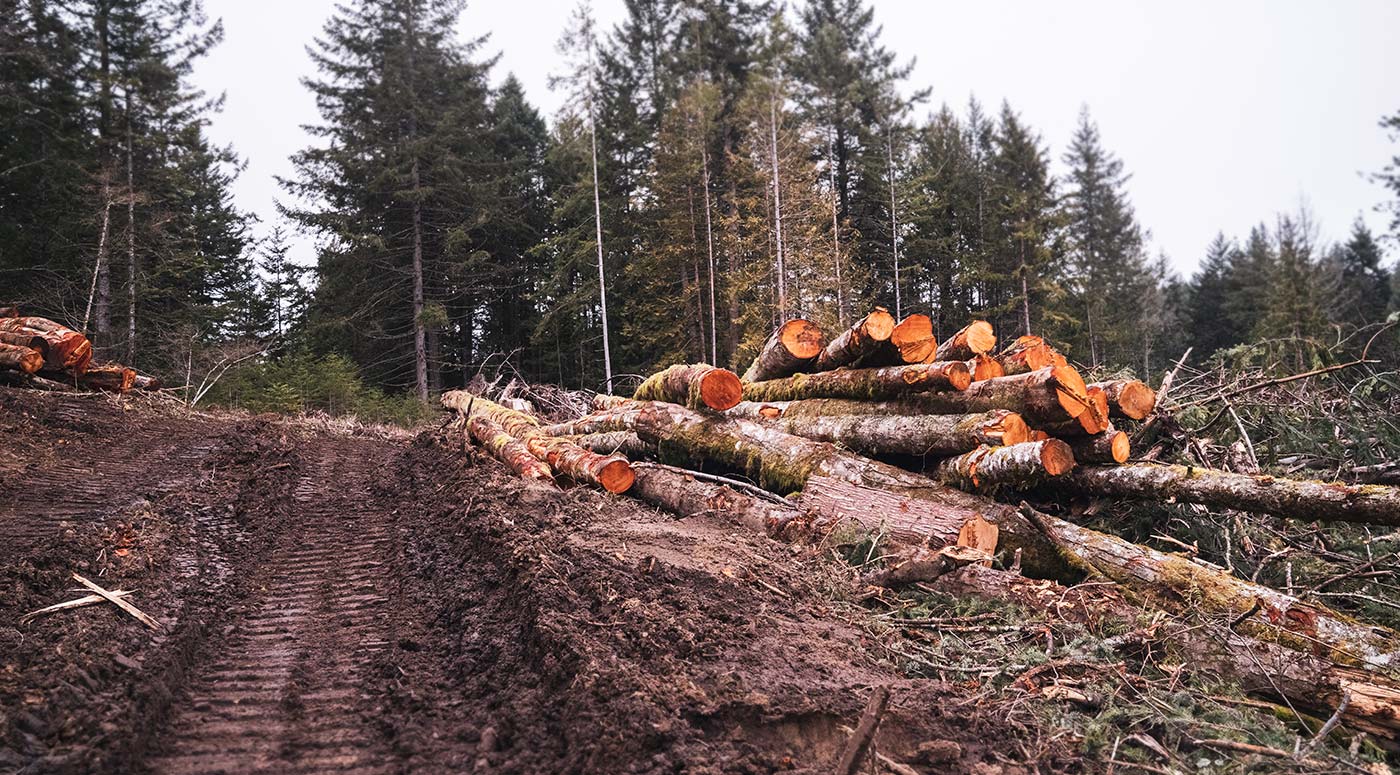
A cutblock with a stack of logs from Salt Spring Island, in the Gulf Islands.

Islands 2050: What will the Gulf Islands look like in 25 years?

The preservation and protection of BC’s Gulf Islands “for the benefit of residents of the trust area and of the province generally” has been charged to the Islands Trust. However, recent decision-making has demonstrated that a majority of Local Trustee’s are focusing on different priorities. In February, Raincoast submitted feedback as part of a public engagement process seeking input on the Islands Trust Policy Statement in two areas: climate change and affordable housing within the Islands Trust area.
Behind the Glass Hunting logo floats over top of a stunning image of a cougar on a beach.

Behind The Glass Hunting with Chris Darimont and Chris Pryn
Chris Darimont spoke with hunter and podcaster Chris Pryn to discuss their shared interests in hunting and habitat protection, and also to figure out where they disagree. It’s a remarkable interview, in part, because both Darimont and Pryn work so hard to have a respectful conversation despite their differences.
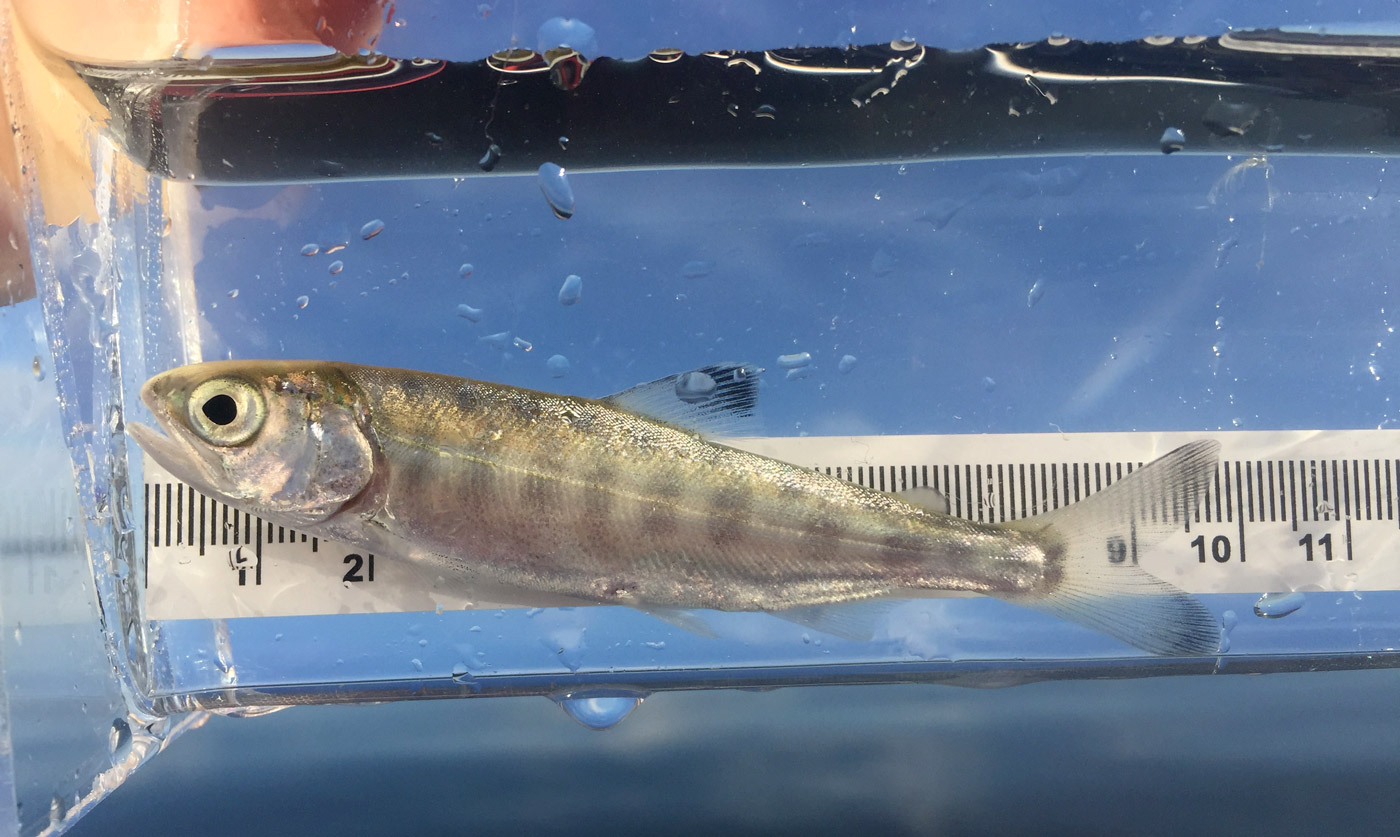
A juvenile Chinook salmon is measured in a clear container with water with the estuary in the background.

Otolith study confirms Harrison Chinook salmon rely on the Fraser River Estuary for early growth

Chinook salmon from the Harrison River, which was declared Canada’s first Salmon Stronghold, do something unique; rather than growing in their home lake and river system for the first year or more as many other salmon do, these fish go on a great adventure.
Culturally modified tree in the Great Bear Rainforest, being measured by Stephen Neasloss.

New research identifies ancient culturally-modified trees, and with them the future of forest management

After practising sustainable forest management for millennia, the Kitasoo/Xai’xais Nation has looked to its ancient cedar trees to help guide the future of its forests stewardship.