
Plastic pollution

Photo by April Benze.

Plastic pollution is choking our waterways and threatening the health of fish and wildlife. We are collecting plastic and microplastic data as part of our community-oriented water pollution monitoring program. We are collaborating on research projects with universities, governments and experts in the field. We are providing advice to local, regional and federal governments on plastic science, policies, and regulations. We are working with Ocean Diagnostics to support a strong science-based foundation for solutions.


Lots of garbage on a beach.
Photo by Simon Ager.
People working together to take samples of water in jars.
Photo by Alex Harris / Raincoast Conservation Foundation.

Our approach

  • Design a source identification toolbox for plastic pollution; 
  • Working with Indigenous and coastal communities to document plastic pollution and track this back to its source;
  • Conduct research on the source, transport and fate of micro and macroplastics in the environment;
  • Engage in outside-the-box dialogue with industry and governments to support more sustainable design, manufacturing and processes that stem the release of plastics during the life cycle of a product;
  • Support community-oriented outreach and training to support solution-oriented actions and capacity building.

Plastics are everywhere

Plastics from just about every sector can now be found all over the world – from mountain tops to the seafloor, from the Arctic to the Antarctic, and from our homes to the ocean. A modern-day scourge that is blighting remote beaches and shorelines, getting mistaken for food by wildlife, and getting into the foods that nourish us. Whether it’s the structural features of plastic products that suffocate, entangle, or create intestinal blockages – or the endocrine disrupting-contaminants that serve as ingredients of the product (e.g. Bisphenol A or phthalate esters) or as hitchhikers soaked up by plastics in the environment (e.g. PCBs or metals) – plastics are harmful.

Underwater photo of plastic floating near the top of the water.
Chinook salmon swim in a river as seen from head on; epic.
Photo by Fernando Lessa.

The impact on the environment

Without a dramatic re-think, the plastic crisis is here to stay. Despite the best intentions of governments, industry, and consumers to reduce, recycle or re-use, global plastic production continues to enjoy exponential growth. And the unintentional loss to the environment of plastic products and byproducts will continue – plastic bags, bottles, and fishing gear, as well as the discharge of microplastics through domestic and industrial waste. With that will come a constant stream of items that will be mistaken for food but offer zero nutrition, that will entangle wildlife, and will deliver endocrine disruptors to our aquatic food webs. We will document impacts, share findings, and work for change through science, community engagement, and expert advice.

Recent articles

Five Southern Resident killer whales swim side by side in the Salish Sea.

Feds’ fisheries announcement a welcome first step: groups renew call for killer whale emergency order

Conservation groups applaud today’s federal announcement that endangered Southern Resident killer whales face “imminent threats” to their survival and recovery. Prompted by this assessment, the Ministers also announced fisheries closures in key foraging areas …
A Pacific herring stops moving for a moment; figures from the research about herring are on the right hand side.

Pacific herring spawn events influence nearshore subtidal and intertidal species
Although we know that herring play a pivotal ecological role in nearshore ecosystems, from a scientific perspective little is known about the amount of energy and nutrients they transfer from the ocean to the land. Therefore, researchers at Raincoast Conservation Foundation, University of Victoria, and Dalhousie University, aimed to determine if the nutrients that herring…
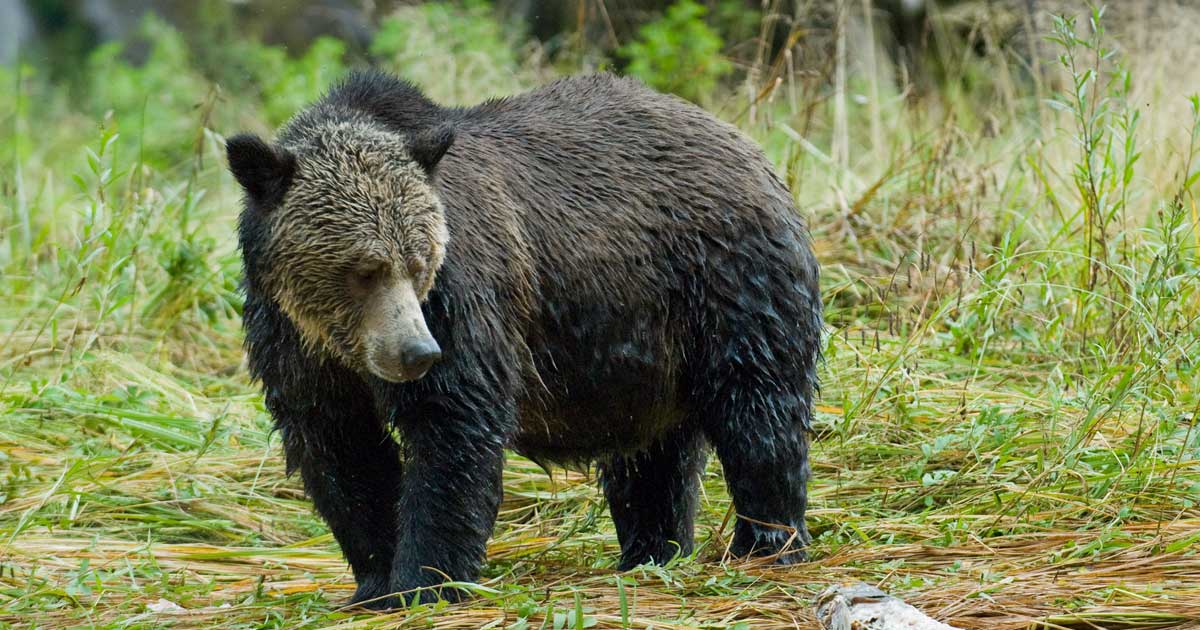
A grizzly bear meanders in the Great Bear rainforest.

Confronting the elephant (head) in the room – researchers challenge the conservation community on the ethics of trophy hunting
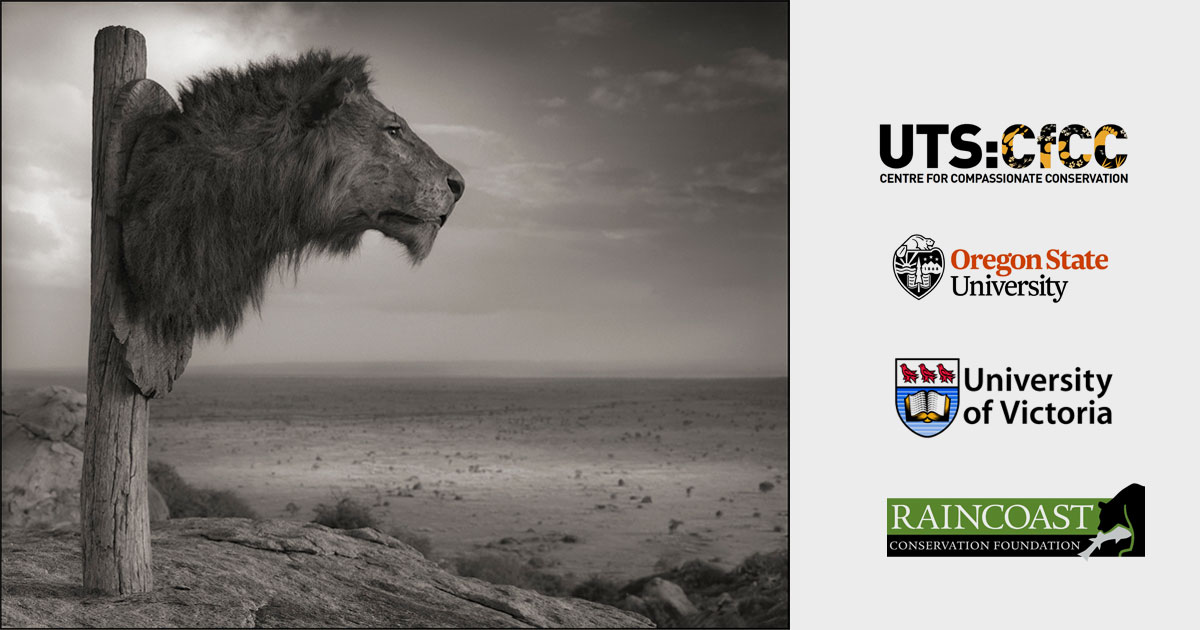
Writing in the scientific journal, Conservation Letters, an international team of conservation scientists is challenging the conservation community to fully consider the ethics of trophy hunting and think critically about endorsing the practice as a key funding mechanism for wildlife protection. Read our new paper, “The elephant (head) in the room: A critical look at trophy…
A lion head is attached as a trophy to a post overlooking a large expanse of desert, and several University logos on the right hand side.

Conservation Letters: The elephant (head) in the room: A critical look at trophy hunting
Writing in the scientific journal, Conservation Letters, an international team of conservation scientists argue that trophy hunting – hunting that involves the collection of animal body parts, or “trophies,” – is morally wrong. Led by Chelsea Batavia from the Department of Forest Ecosystems and Society at Oregon State University, the authors identify trophy hunting as…
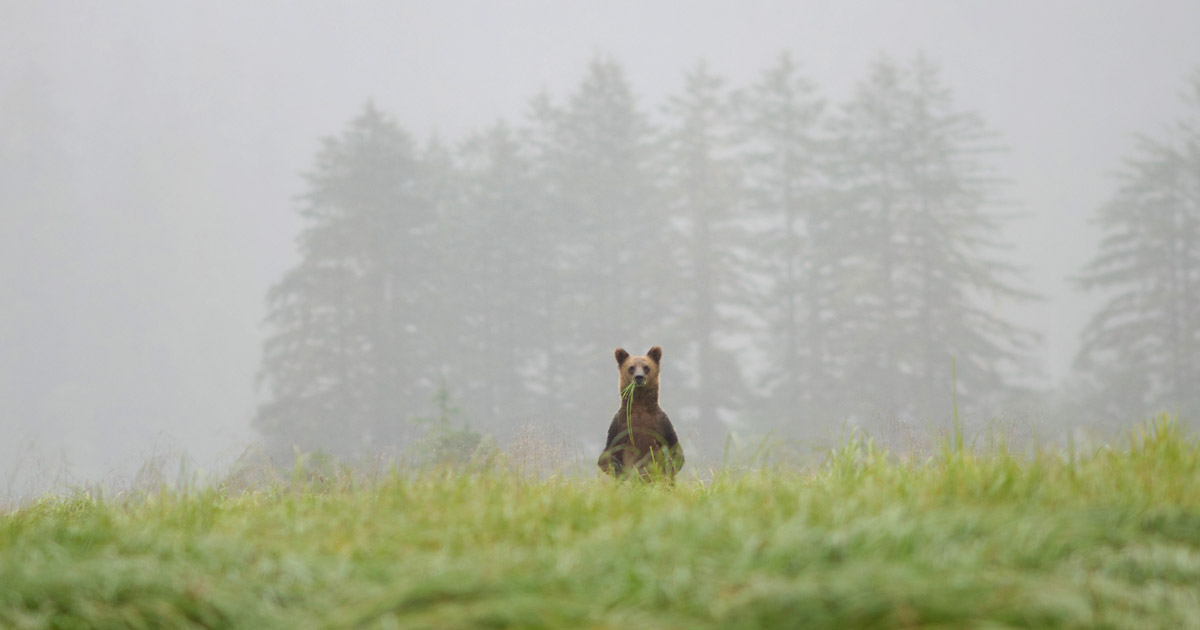
A bear stands in the distant grass and fog to get a better look or maybe smell.

On the hunt for science in ‘science-based’ hunts
For years, British Columbia’s wildlife management practices, especially its wolf cull and grizzly bear hunt, have been controversial. In 2015, then-Premier Christy Clark defended the province’s wildlife policies, stating they were grounded in sound science. That, at least, was the claim. And not one unique to British Columbia. In fact, hunting in Canada and the…
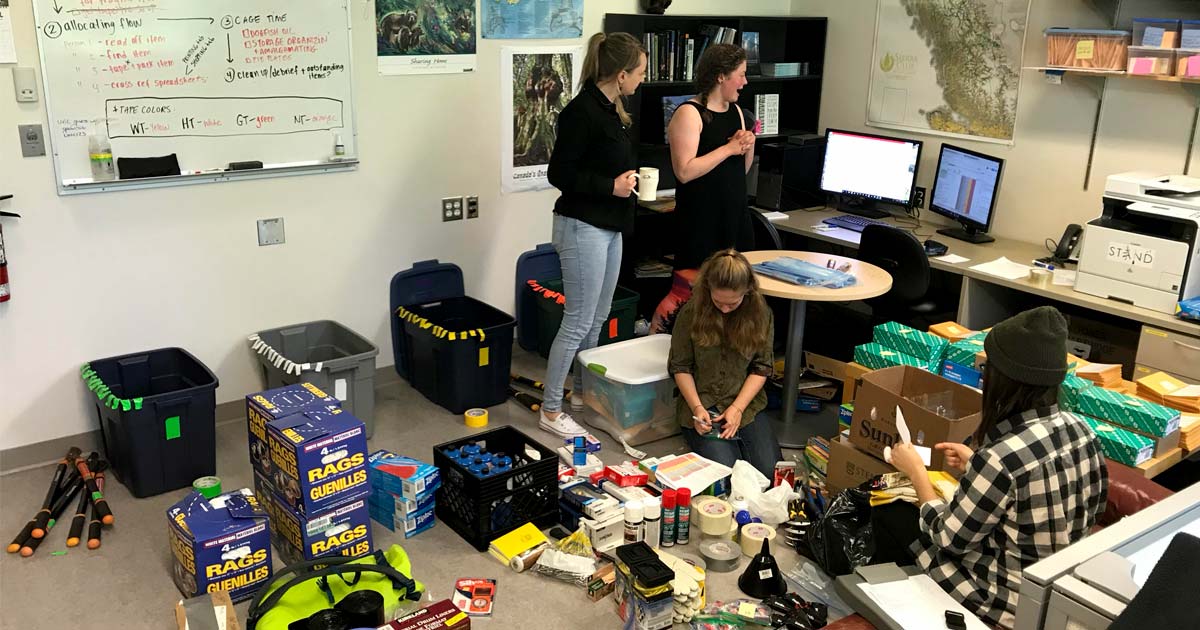
Kate Field and the bear research squad prepare for the imminent field season.

Notes from the (pre) field: “Caution – bear research in progress”

With spring comes organized chaos as graduate students and research associates transition from laboratory work, data analysis and writing, to a flurry of preparation for an upcoming season of monitoring bears on the central coast of British Columbia. We are headed to Gitga’at, Heiltsuk, Kitasoo/Xai’xais, Nuxalk and Wuikinuxv Territories to join…
Maps of marine birds distributions and densities overlaid onto a tufted puffin.

Predictions from machine learning ensembles: marine bird distribution and density on Canada’s Pacific coast

In February of 2017, a team of researchers, including Raincoast senior scientist Dr. Paul Paquet, from five research facilities published their findings in Marine Ecology Progress Series: “Predictions from machine learning ensembles: Marine bird distribution and density on Canada’s Pacific coast”…
A tug lines up beside a massive oil tanker.

Trans Mountain expansion poses unacceptable risk to Salish Sea

Is Canada’s national interest best aligned with a Texas pipeline company? The suggestion of bailing out U.S.-based Kinder Morgan and investing tax dollars to access public assets in a sunset industry, while momentous questions of Canadian law are still before the courts, is nothing short of absurd…