Plastic pollution

Photo by April Benze.

Plastic pollution is choking our waterways and threatening the health of fish and wildlife. We are collecting plastic and microplastic data as part of our community-oriented water pollution monitoring program. We are collaborating on research projects with universities, governments and experts in the field. We are providing advice to local, regional and federal governments on plastic science, policies, and regulations. We are working with Ocean Diagnostics to support a strong science-based foundation for solutions.


Lots of garbage on a beach.
Photo by Simon Ager.
People working together to take samples of water in jars.
Photo by Alex Harris / Raincoast Conservation Foundation.

Our approach

  • Design a source identification toolbox for plastic pollution; 
  • Working with Indigenous and coastal communities to document plastic pollution and track this back to its source;
  • Conduct research on the source, transport and fate of micro and macroplastics in the environment;
  • Engage in outside-the-box dialogue with industry and governments to support more sustainable design, manufacturing and processes that stem the release of plastics during the life cycle of a product;
  • Support community-oriented outreach and training to support solution-oriented actions and capacity building.

Plastics are everywhere

Plastics from just about every sector can now be found all over the world – from mountain tops to the seafloor, from the Arctic to the Antarctic, and from our homes to the ocean. A modern-day scourge that is blighting remote beaches and shorelines, getting mistaken for food by wildlife, and getting into the foods that nourish us. Whether it’s the structural features of plastic products that suffocate, entangle, or create intestinal blockages – or the endocrine disrupting-contaminants that serve as ingredients of the product (e.g. Bisphenol A or phthalate esters) or as hitchhikers soaked up by plastics in the environment (e.g. PCBs or metals) – plastics are harmful.

Underwater photo of plastic floating near the top of the water.
Chinook salmon swim in a river as seen from head on; epic.
Photo by Fernando Lessa.

The impact on the environment

Without a dramatic re-think, the plastic crisis is here to stay. Despite the best intentions of governments, industry, and consumers to reduce, recycle or re-use, global plastic production continues to enjoy exponential growth. And the unintentional loss to the environment of plastic products and byproducts will continue – plastic bags, bottles, and fishing gear, as well as the discharge of microplastics through domestic and industrial waste. With that will come a constant stream of items that will be mistaken for food but offer zero nutrition, that will entangle wildlife, and will deliver endocrine disruptors to our aquatic food webs. We will document impacts, share findings, and work for change through science, community engagement, and expert advice.

Recent articles

A happy large black bear walks down the road.

B.C.’s human-wildlife conflict response needs reform

Recent events have raised important legal questions about the policies, practices, and procedures of the British Columbia Conservation Officer Service (BCCOS) for responding to human-wildlife conflicts. This past summer was marked by multiple encounters involving people and black bears in the Lower Mainland, with accompanying BCCOS-related controversy as well. In a high-profile incident in Coquitlam,…
Doug Neasloss speaks to the crowd at the Pipe Shop for BC Bear Day 2019.

BC Bear Day was a success!

BC Bear Day this past weekend was a grand success. We saw lots of kids, teddy bears in hand, residents looking for tips on how to coexist with bears and people generally interested in learning more about bears. The afternoon portion of the event was filled with presentations, games, face painting, bear yoga and an…
Grass in the foreground gives way to epic mountains of the Kitlope valley.

Kitlope River estuary visit

This spot on a map of BC means little until you follow the 70-mile Gardner Canal that branches off Devastation Channel and winds its way deep into the coastal mountains of northern BC.  While single-handing my old wooden sailboat, ERN, I was reminded of my first trip to the mountains and the thrill of seeing…
Close up of a painting of a golden grizzly.

BC Bear Day photography exhibit

As part of BC Bear Day – this Sunday in North Vancouver – you can view a fantastic collection of wildlife photography that will, of course, include BC Bears. You can take a sneak peak below, and we hope you can view them in person.  The event is hosted in the stunning heritage status Pipe-Shop,…
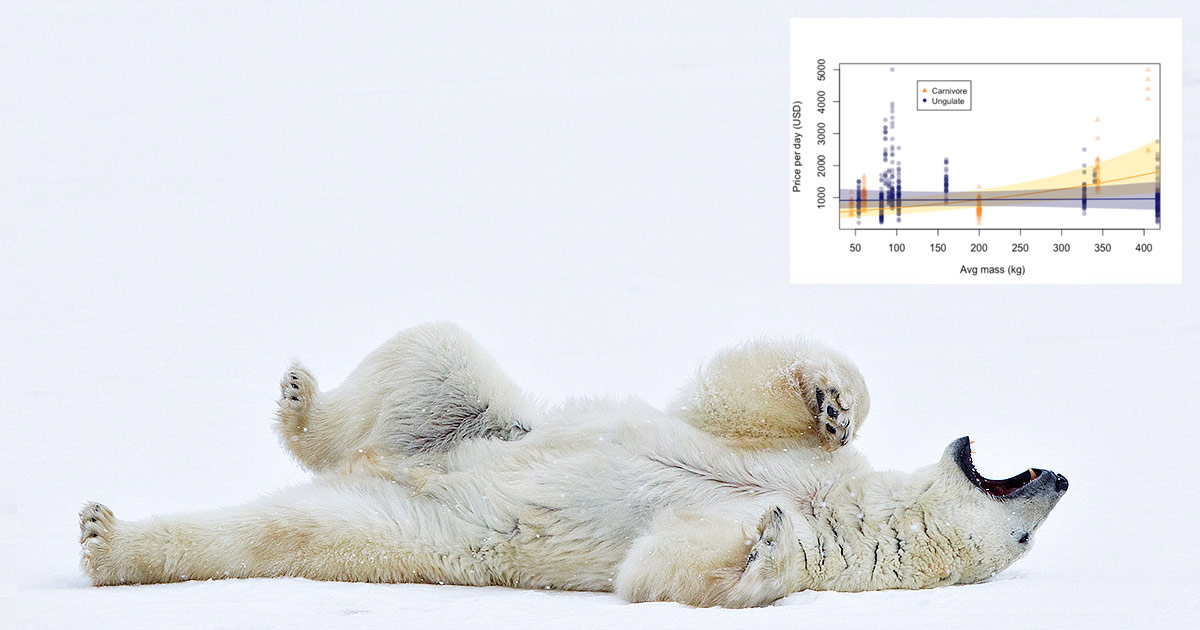
A polar bear rolls on their back with their mouth open, and there's a graph floating in the top right.

Research: Trophy hunters pay more to target larger-bodied carnivores

The behaviour of human hunters diverges from other animals. Other predators tend to target vulnerable individuals in prey populations. Humans, often males, tend to hunt large, reproductive-aged individuals. In the case of guided trophy hunting these species are likely perceived as costly, by increasing failure risk and risk of injury, and providing lower nutritional returns.
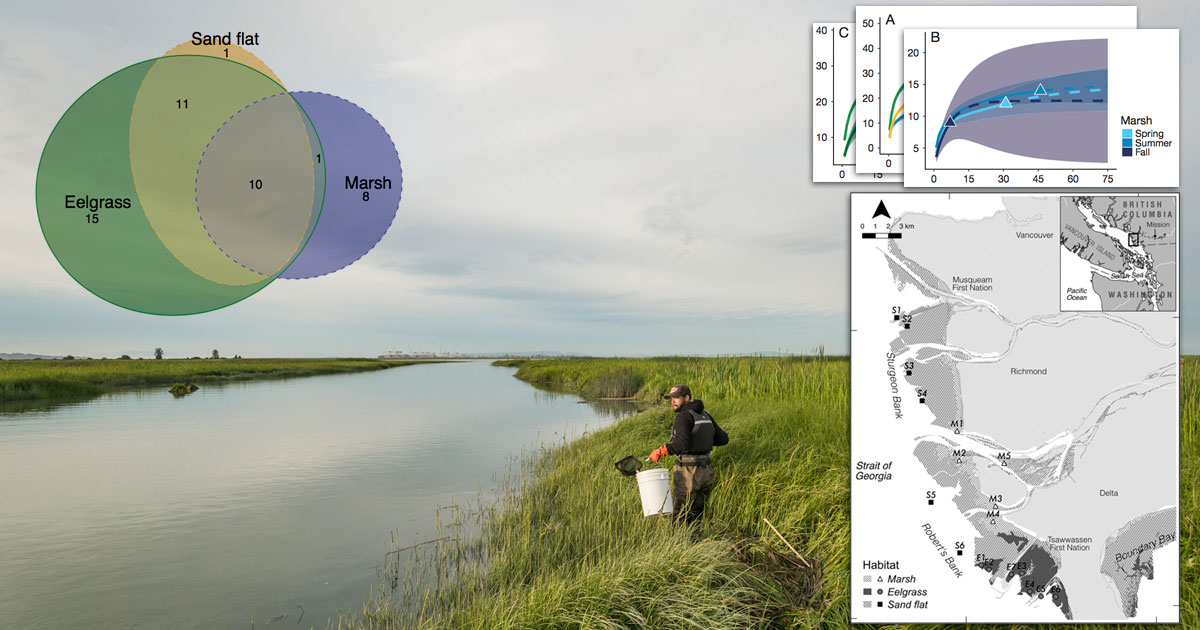
Dave Scott, Misty MacDuffee, Lia Chalifour, and Charlie Clark work in the Fraser River Estuary.

How new research on habitats within the Fraser River estuary implicates conservation strategy

Raincoast biologist Misty MacDuffee joined Mark Brennae on CFAX 1070 to talk about the Fraser River and the fish that rely on its distinct and interconnected habitat. The Fraser Estuary supports more than 100 species that are recognized as “at-risk” (threatened, endangered or of concern) either provincially or federally.1 Misty MacDuffee is part of a…
The Tooth and Nail is a sailboat and it is shown here sailing very fast.

Buy a boat, help protect coastal carnivores
We have a fantastic opportunity for you to own a beautiful sailboat while supporting the conservation of wildlife at the same time. Tooth and Nail was donated to us by the family of the late Ronald Martin. Ronald and his family have been longtime supporters of Raincoast. Ron loved to sail Tooth and Nail as…
An expansive view of a Raincoast scientist working in the field in the Fraser River estuary.

Habitat use by juvenile salmon, other migratory fish, and resident fish species underscores the importance of estuarine habitat mosaics

Pacific salmon, especially Chinook and Chum, reside and feed in estuaries during downstream migrations. But the extent to which they rely on estuaries, and which habitats within estuaries, is not well understood. We need to understand this complexity if we are going to enact effective conservation policies. This is especially important in urban systems where habitat loss is ongoing, and at different rates across the estuarine mosaic. The Fraser River estuary, for example, supports a multitude of fish species…