Conservation Genetics Laboratory 

Our conservation genetics research addresses threats to cetaceans, fish, and coastal carnivores. 

The Conservation Genetics Lab is an integral part of Raincoast’s efforts to protect the land, waters and wildlife of coastal BC. The DNA and RNA analysis we perform provides our scientists with reliable insights into the population structure, health, diets, and resilience and genetic isolation of coastal species. The lab works closely with our Cetacean Conservation Research Program and also helps answer important questions for our other conservation initiatives. 
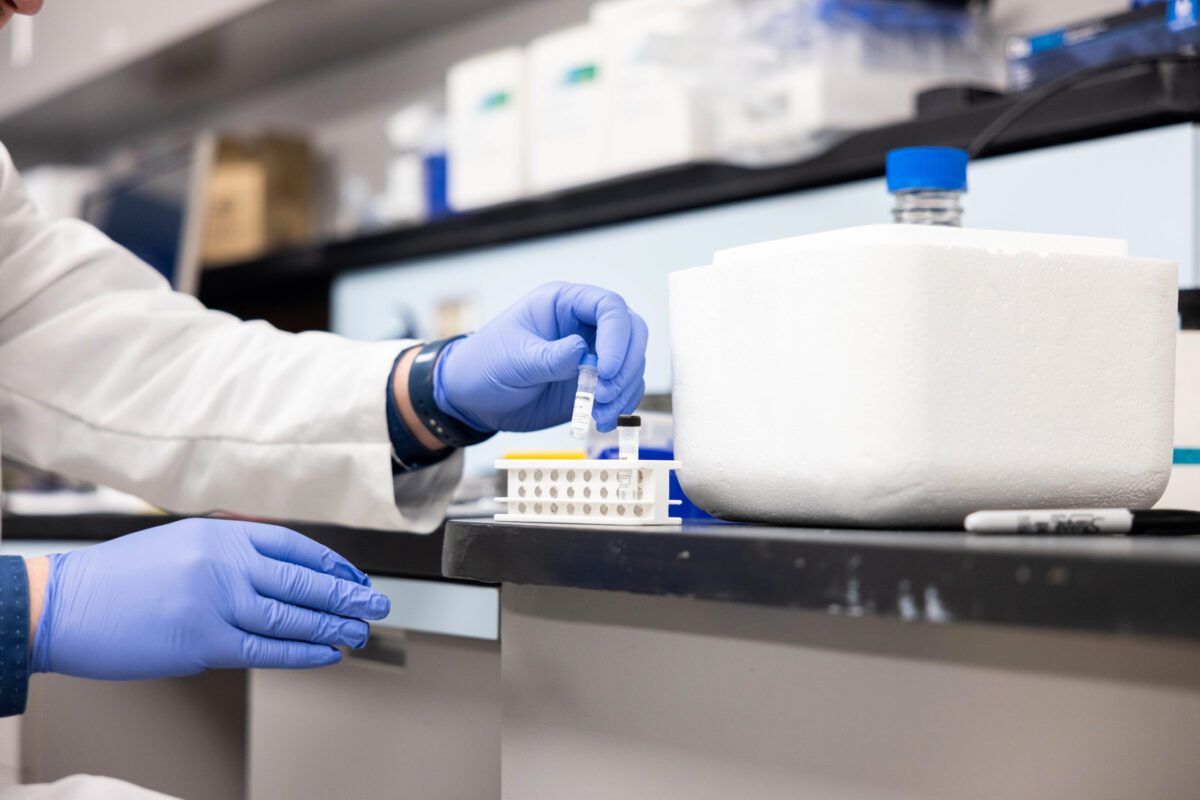
Two hands wearing blue gloves holding and organizing beakers.
Research scientist Adam Warner holding two small beakers while wearing a lab coat in a lab.

Cutting edge genetics and genomics analysis

The Raincoast Conservation Genetics Lab is equipped with a complete set of instrumentation to conduct molecular biology and genetics, including cutting-edge DNA sequencing technology. Our Research Scientist, Dr. Adam Warner, has extensive experience in genetics, genomics and DNA sequencing, has set up our lab space and has begun to carry out this research under the guidance of our Cetacean Research Program directors Dr. Lance Barrett-Lennard and Dr. Valeria Vergara. The lab works alongside Fisheries and Oceans Canada, which is hosting our lab space at the Pacific Science Enterprise Centre.

Understanding killer whale diet

A lack of sufficient Chinook salmon in the diets of Southern and Northern Resident killer whales has been linked to declines in population health. Our lab has the ability to extract and analyze salmon DNA from Resident killer whales feces, to identify the salmon stocks of most importance to the whales. Since we can identify the individual whales that produced fecal material genetically, we can link other health metrics such as stress hormone levels (also found in the fecal material) to individual killer whales. 
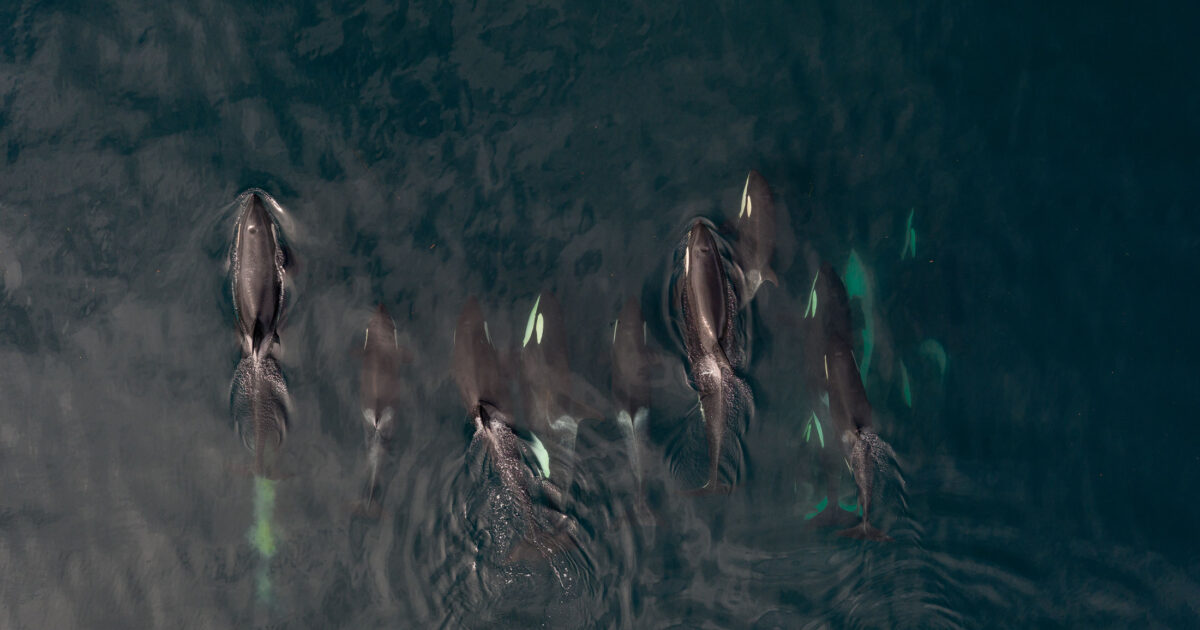
Overhead photo of a pod of killer whales swimming in the ocean.
Photo by Raincoast Conservation Foundation, taken under SARA Research License XMMS-2-2022.
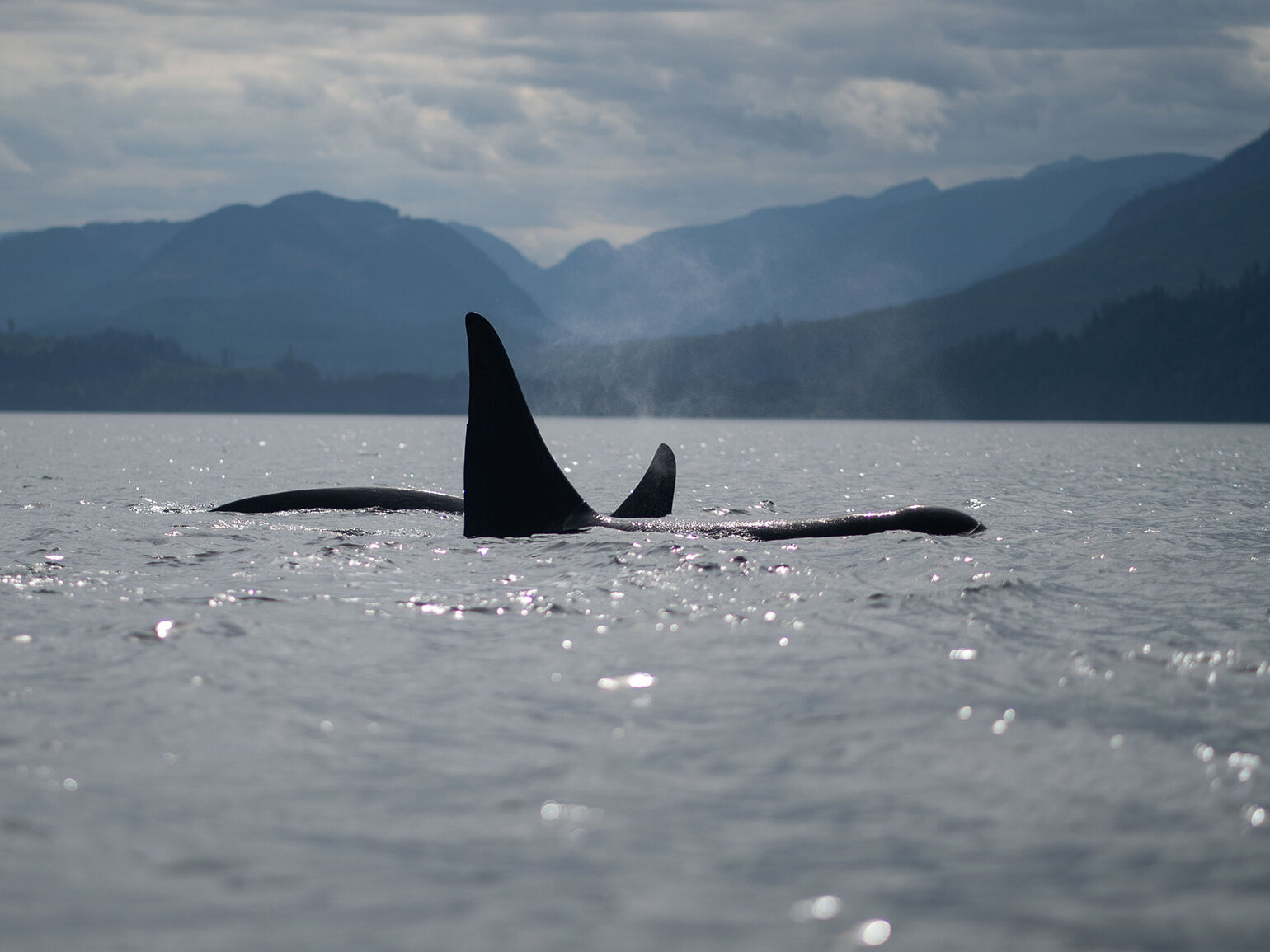
Two killer whales surfacing on the ocean.
Photo by John Kelsey.

Killer whale population health and dynamics

Killer whales live in small populations that from their size alone would appear to be vulnerable to negative effects of inbreeding.  We recently sequenced the entire genomes of 142 members of the Northern Resident population to directly  assess inbreeding, genetic diversity, and immune system strength. We are comparing this information in this dataset to one for Southern Residents compiled by NOAA in the United States. This will help us gain insight into the comparative health of these important fish-eating populations of killer whales. We are also finalizing a study of inbreeding in marine mammal-eating Bigg’s killer whales, which will inform our understanding of similarities and differences between North Pacific killer whale populations.

Environmental DNA to aid research focused on wild salmon and coastal wolves

Our research on wild salmon and coastal wolf populations has the potential to be expanded through the use of environmental DNA (eDNA) monitoring and analysis. Through eDNA, we can track and assess salmon populations and determine abundance and diversity. Using wolf scat samples we can identify specific individuals, their sex, and the prey consumed. By learning more about these important populations, we hope to drive policy change to protect biodiversity.

Research scientist Adam Warner holding two small beakers while wearing a lab coat in a lab.
Photo by Alex Harris / Raincoast Conservation Foundation.

Recent articles

The Hunting Collective podcast brand to the left of Chris Darimont on a river in the central coast.

Exploring human dimensions of hunting via social science, evolutionary ecology, and personal experience

In episode 140 of The Hunting Collective podcast, Ben O’Brien does a fascinating and good-natured follow up interview with Dr. Barrie Gilbert. Dr. Gilbert is a prominent bear biologist, friend of Raincoast, and previous verbal sparring-partner with Ben (at least when it comes to the hunting of predators). Ben invited Dr. Gilbert back for another interview, and they made productive amends…
Episode 4 of Wolf School with Cristina Mittermeier.

Join us for episode 4 of Wolf School with Cristina Mittermeier

Many of you will recognize Cristina’s iconic images of coastal wolves and wildlife around the world. Cristina is also a pioneer in the field of conservation photography. She was a founding member of the International League of Conservation Photographers and also established conservation charity SeaLegacy…
Shauna Doll looks up while she big tree hunting on Salts Spring.

Big tree hunting on Salt Spring Island

Earlier this month I spent two beautiful days on the coast of the Salish Sea, hunting for big trees. I was fortunate to join a research group of passionate “tree people” including Dr. Tara Martin, head of the Conservation Decisions Lab in the Faculty of Forestry at UBC; her Research Assistant, Cassandra Holt; Tony MacLeod from the Salt Spring Conservancy, and Jeff Shatford from the Ministry of Forests, Lands, Natural Resource Operations and Rural Development to measure some of the tallest trees on Salt Spring Island…
Wolf School with Heather Bryan.

Wolf School Episode 3 with biologist Dr. Heather Bryan

After our fantastic second episode with the Wolf Conservation Center’s Regan Downey last week, our next wolf school session will feature another inspiring scientist and educator, Dr. Heather Bryan. Now an Assistant Professor in Ecosystem Science and Management at the University of Northern BC, Heather has played a critical role in Raincoast’s work on coastal wolves and bears for many years…
The trains and containers on the causeway to Terminal 2.

US organizations call on Washington State to oppose Canada’s Terminal 2 expansion in the Salish Sea
41 environmental and sustainability organizations in Washington State have written Governor Jay Inslee (PDF) asking him to oppose RBT2 on behalf of Washingtonians and the environmental, cultural and economic resources of Washington state…
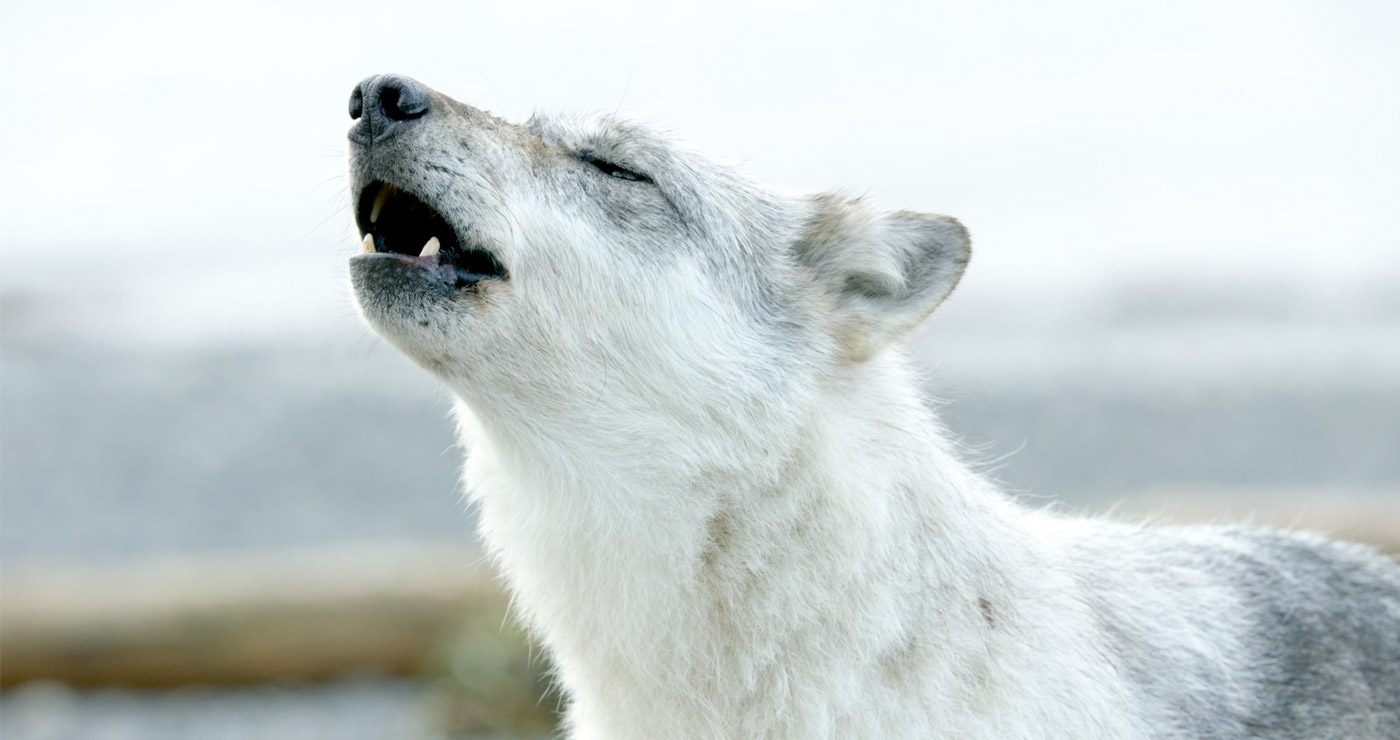
A close up on the face and mouth of a wolf with white and grey markings while it howls.

Your invitation to Wolf School

With close family ties and complex communication, wolves live lives that humans can easily empathize with across cultures. Yet, the wolf is still persecuted, including here in BC…
Cover of the open letter to the PMO standing beside a large elk.

Nature conservation should be central to Canada’s recovery from COVID-19
The Right Honourable Justin Trudeau, PC, MPPrime Minister of CanadaOffice of the Prime Minister and Privy Council Parliament BuildingsOttawa, Ontario K1A 1A6 July 10, 2020 Dear Prime Minister Trudeau: As organizations with a strong commitment to defending nature in Canada, we want to acknowledge the efforts that the Government of Canada has made to protect…
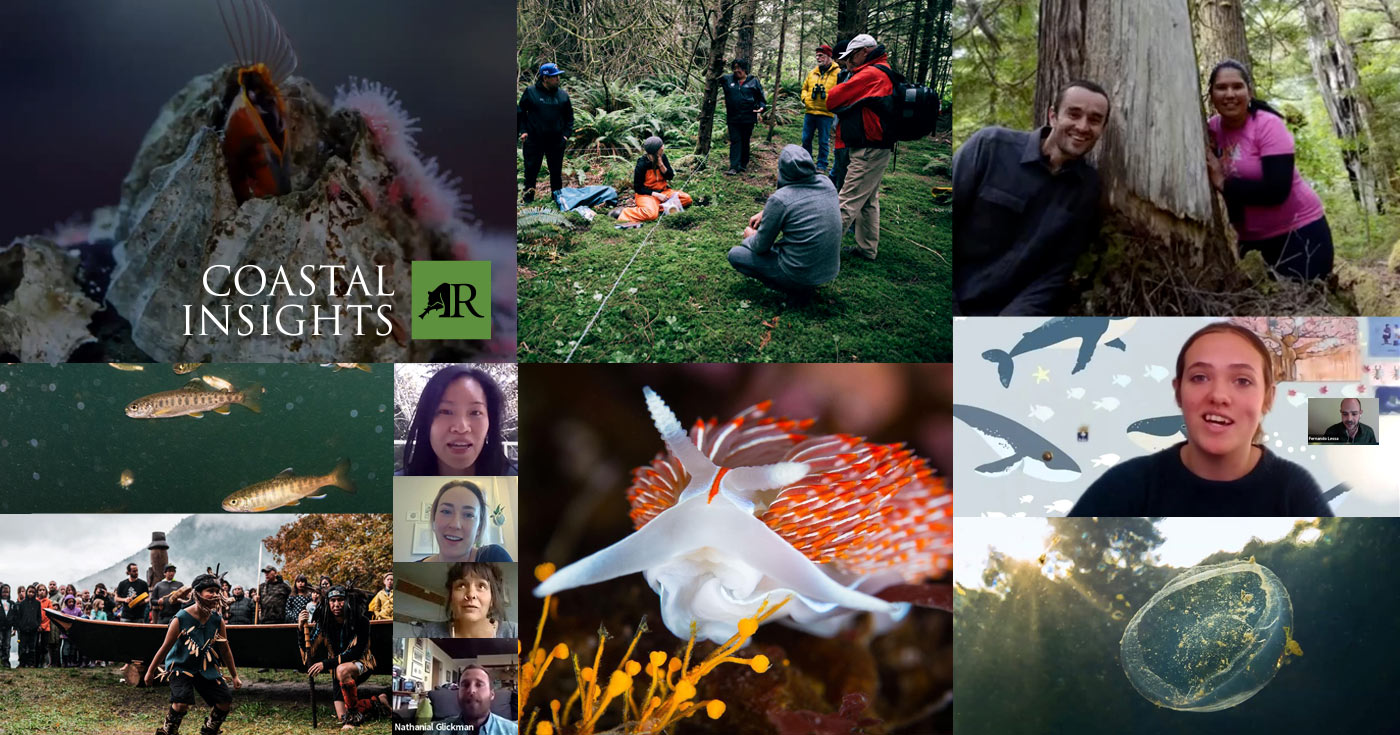
A mashup of images and profile photos from the Coastal Insights series episodes.

Coastal Insights online education series about nature, people, and place is now complete and available

The pandemic has impacted our lives in many ways, particularly with regard to learning in schools and experiential programming. Teachers have had to fast-track their technological skills and shift from their regular face to face connections with students to engaging through online learning. Raincoast knows this first hand as we were literally one week away…