Conservation Genetics Laboratory 

Our conservation genetics research addresses threats to cetaceans, fish, and coastal carnivores. 

The Conservation Genetics Lab is an integral part of Raincoast’s efforts to protect the land, waters and wildlife of coastal BC. The DNA and RNA analysis we perform provides our scientists with reliable insights into the population structure, health, diets, and resilience and genetic isolation of coastal species. The lab works closely with our Cetacean Conservation Research Program and also helps answer important questions for our other conservation initiatives. 

Two hands wearing blue gloves holding and organizing beakers.
Research scientist Adam Warner holding two small beakers while wearing a lab coat in a lab.

Cutting edge genetics and genomics analysis

The Raincoast Conservation Genetics Lab is equipped with a complete set of instrumentation to conduct molecular biology and genetics, including cutting-edge DNA sequencing technology. Our Research Scientist, Dr. Adam Warner, has extensive experience in genetics, genomics and DNA sequencing, has set up our lab space and has begun to carry out this research under the guidance of our Cetacean Research Program directors Dr. Lance Barrett-Lennard and Dr. Valeria Vergara. The lab works alongside Fisheries and Oceans Canada, which is hosting our lab space at the Pacific Science Enterprise Centre.

Understanding killer whale diet

A lack of sufficient Chinook salmon in the diets of Southern and Northern Resident killer whales has been linked to declines in population health. Our lab has the ability to extract and analyze salmon DNA from Resident killer whales feces, to identify the salmon stocks of most importance to the whales. Since we can identify the individual whales that produced fecal material genetically, we can link other health metrics such as stress hormone levels (also found in the fecal material) to individual killer whales. 
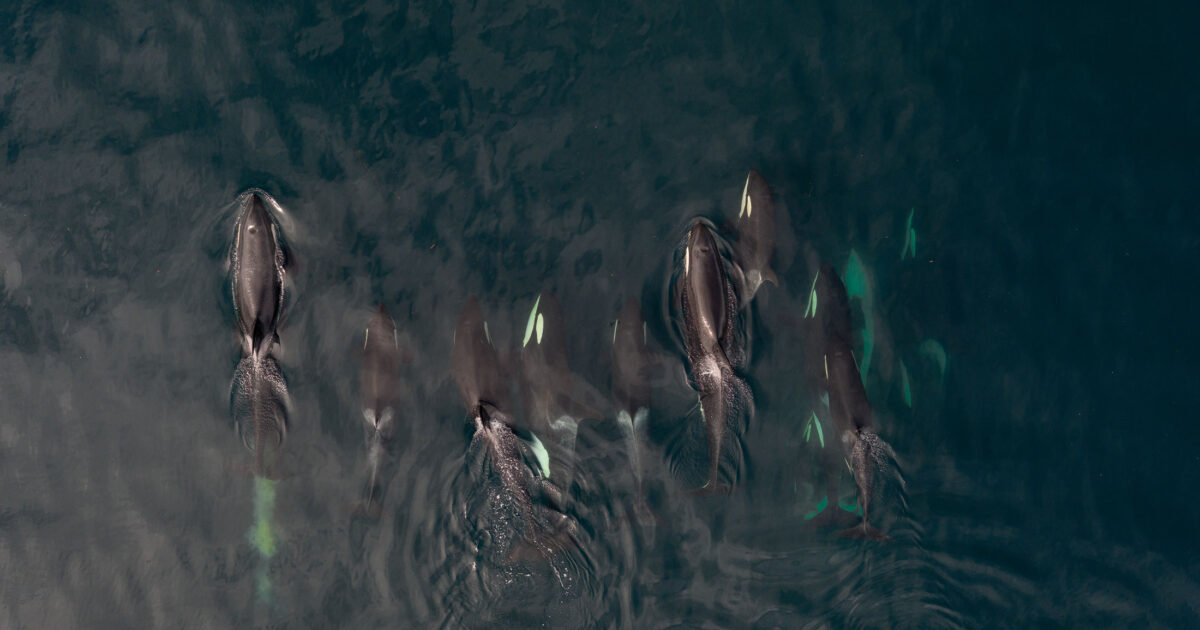
Overhead photo of a pod of killer whales swimming in the ocean.
Photo by Raincoast Conservation Foundation, taken under SARA Research License XMMS-2-2022.
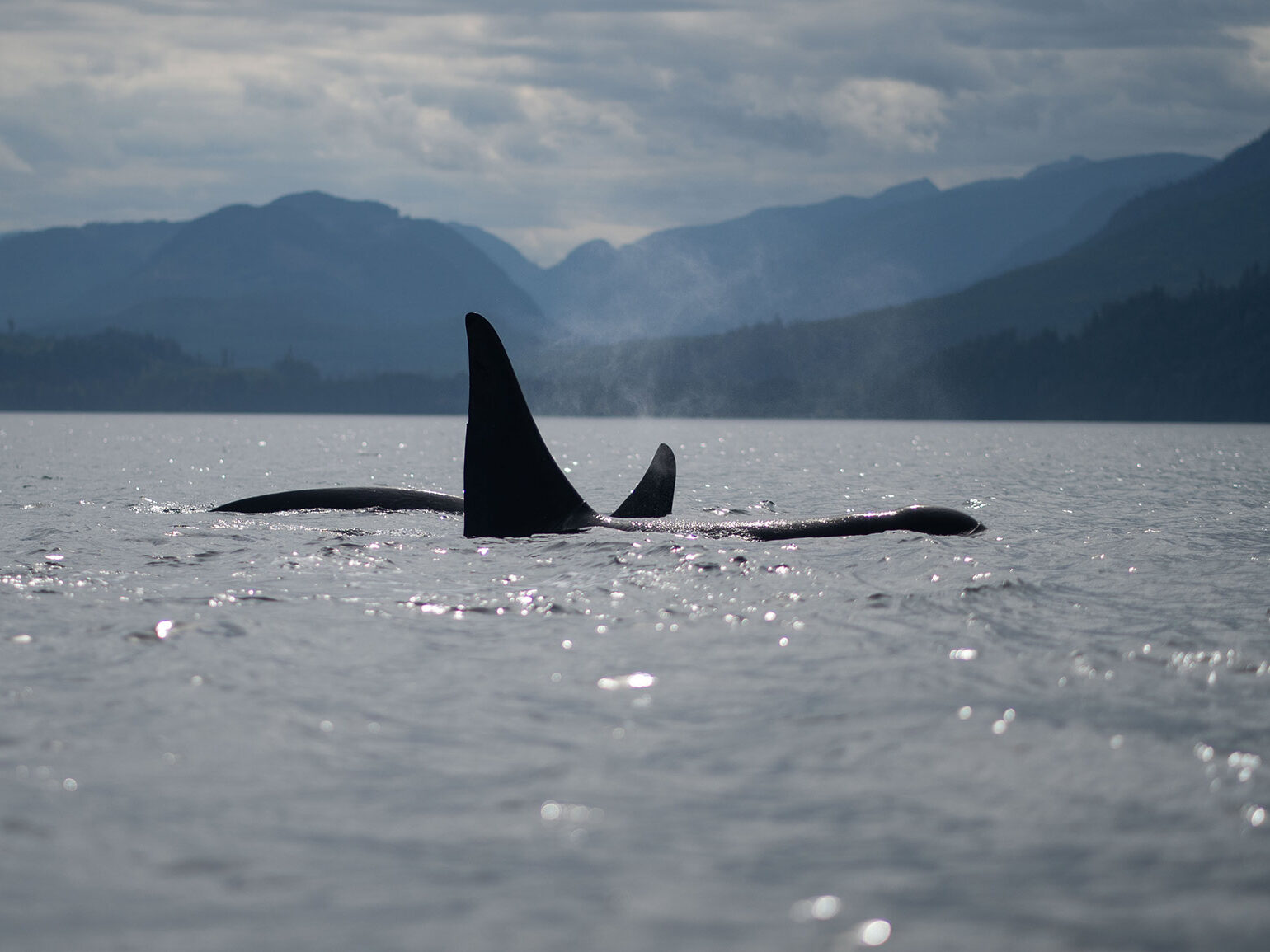
Two killer whales surfacing on the ocean.
Photo by John Kelsey.

Killer whale population health and dynamics

Killer whales live in small populations that from their size alone would appear to be vulnerable to negative effects of inbreeding.  We recently sequenced the entire genomes of 142 members of the Northern Resident population to directly  assess inbreeding, genetic diversity, and immune system strength. We are comparing this information in this dataset to one for Southern Residents compiled by NOAA in the United States. This will help us gain insight into the comparative health of these important fish-eating populations of killer whales. We are also finalizing a study of inbreeding in marine mammal-eating Bigg’s killer whales, which will inform our understanding of similarities and differences between North Pacific killer whale populations.

Environmental DNA to aid research focused on wild salmon and coastal wolves

Our research on wild salmon and coastal wolf populations has the potential to be expanded through the use of environmental DNA (eDNA) monitoring and analysis. Through eDNA, we can track and assess salmon populations and determine abundance and diversity. Using wolf scat samples we can identify specific individuals, their sex, and the prey consumed. By learning more about these important populations, we hope to drive policy change to protect biodiversity.

Research scientist Adam Warner holding two small beakers while wearing a lab coat in a lab.
Photo by Alex Harris / Raincoast Conservation Foundation.

Recent articles

dummy-img

Great Bear Rainforest Agreement

An ongoing assessment of British Columbia’s efforts in protecting the Great Bear Rainforest September 1, 2005 Proposed land use plans for Great Bear Rainforest scientifically inadequate The British Columbia government is currently deciding whether or not to legally implement a new conservation blueprint for the Great Bear Rainforest. After years of consultation with the forestry…
dummy-img

Grizzly Politics in British Columbia

Raincoast has attained a copy of a soon-to-be published opinion piece that calls for the grizzly bear to be de-listed from the US Endangered Species Act. The opinion piece is scheduled to appear in the next issue of the International Bear Association’s official publication, urging the association’s membership to support the Bush administration’s proposed grizzly…
dummy-img

What Comes Around, Goes Around

As I set out, at first all I hear are the drips from my paddle as I enter a secluded lagoon. After several hundred strokes,however, their howls begin to echo along the rolling hills on either side of me. I’m searching for signs of the elusive coastal wolf near an estuary sheltered from the powerful…
dummy-img

You Are What You Eat

Our grizzly bear field crew canoed leisurely down the winding Koeye River, in search of not only the elusive bear itself, but all the evidence it had left behind. Our paddling became soft and rhythmic, yet our eyes scanned each shadow beneath every cedar, and our ears were tuned to any wrestling of leaves or…
dummy-img

The Longest Journey

“You only get one propeller,” someone shouts half-jokingly as we head off from his dock towards Roscoe Inlet.  We are all excited to finally be starting Raincoast’s juvenile salmon migration project.  As we cruise the boat near the shore in search of salmon fry that have recently left their spawning streams for the open ocean,…
dummy-img

Hope Springs Eternal

Hope springs eternal – at least that’s how it feels right now on BC’s c Central coast. The juncos, warblers and sandhill cranes have returned from their wintering grounds in the south. Hummingbirds are everywhere, searching out the sweet salmonberry blossoms. And grizzly bears have been awake and active for almost a month, gorging themselves…
dummy-img

Fish Farm Link to Sea Lice Infections on B.C. Wild Salmon Confirmed

Martin Krkos­ek, Centre for Mathematical Biology, Depts. of Mathematical and Statistical Sciences and Biological Sciences, University of Alberta, Edmonton, AB. The paper described here is published in the Proceedings of the Royal Society of London, Series B, March 2005 as, Krkošek, M., Lewis, M. A., & Volpe, J. P. Transmission dynamics of parasitic sea lice…
dummy-img

Down to the Wire

by Faisal Moola Large Carnivore Projects Coordinator Victoria, BC, March 2005 It’s election time in British Columbia this spring (May 17) and campaigning by the various political parties has already begun in earnest.   In addition to the persistent concerns of the electorate on health care and education, the environment could also be a factor in…