Conservation Genetics Laboratory 

Our conservation genetics research addresses threats to cetaceans, fish, and coastal carnivores. 

The Conservation Genetics Lab is an integral part of Raincoast’s efforts to protect the land, waters and wildlife of coastal BC. The DNA and RNA analysis we perform provides our scientists with reliable insights into the population structure, health, diets, and resilience and genetic isolation of coastal species. The lab works closely with our Cetacean Conservation Research Program and also helps answer important questions for our other conservation initiatives. 

Two hands wearing blue gloves holding and organizing beakers.
Research scientist Adam Warner holding two small beakers while wearing a lab coat in a lab.

Cutting edge genetics and genomics analysis

The Raincoast Conservation Genetics Lab is equipped with a complete set of instrumentation to conduct molecular biology and genetics, including cutting-edge DNA sequencing technology. Our Research Scientist, Dr. Adam Warner, has extensive experience in genetics, genomics and DNA sequencing, has set up our lab space and has begun to carry out this research under the guidance of our Cetacean Research Program directors Dr. Lance Barrett-Lennard and Dr. Valeria Vergara. The lab works alongside Fisheries and Oceans Canada, which is hosting our lab space at the Pacific Science Enterprise Centre.

Understanding killer whale diet

A lack of sufficient Chinook salmon in the diets of Southern and Northern Resident killer whales has been linked to declines in population health. Our lab has the ability to extract and analyze salmon DNA from Resident killer whales feces, to identify the salmon stocks of most importance to the whales. Since we can identify the individual whales that produced fecal material genetically, we can link other health metrics such as stress hormone levels (also found in the fecal material) to individual killer whales. 
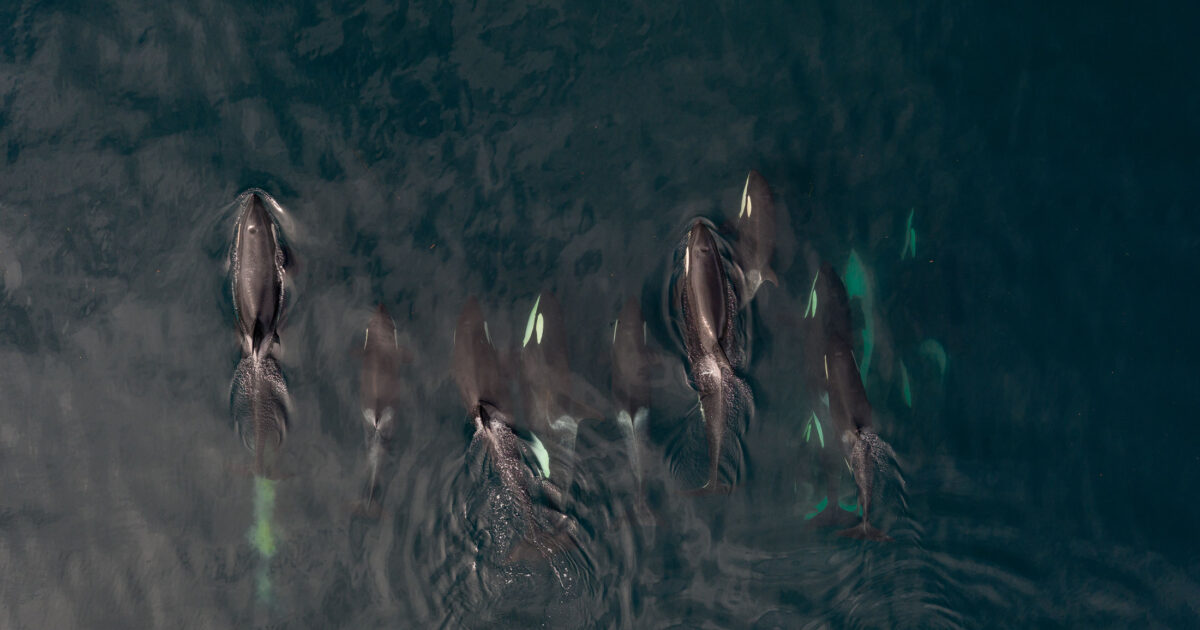
Overhead photo of a pod of killer whales swimming in the ocean.
Photo by Raincoast Conservation Foundation, taken under SARA Research License XMMS-2-2022.
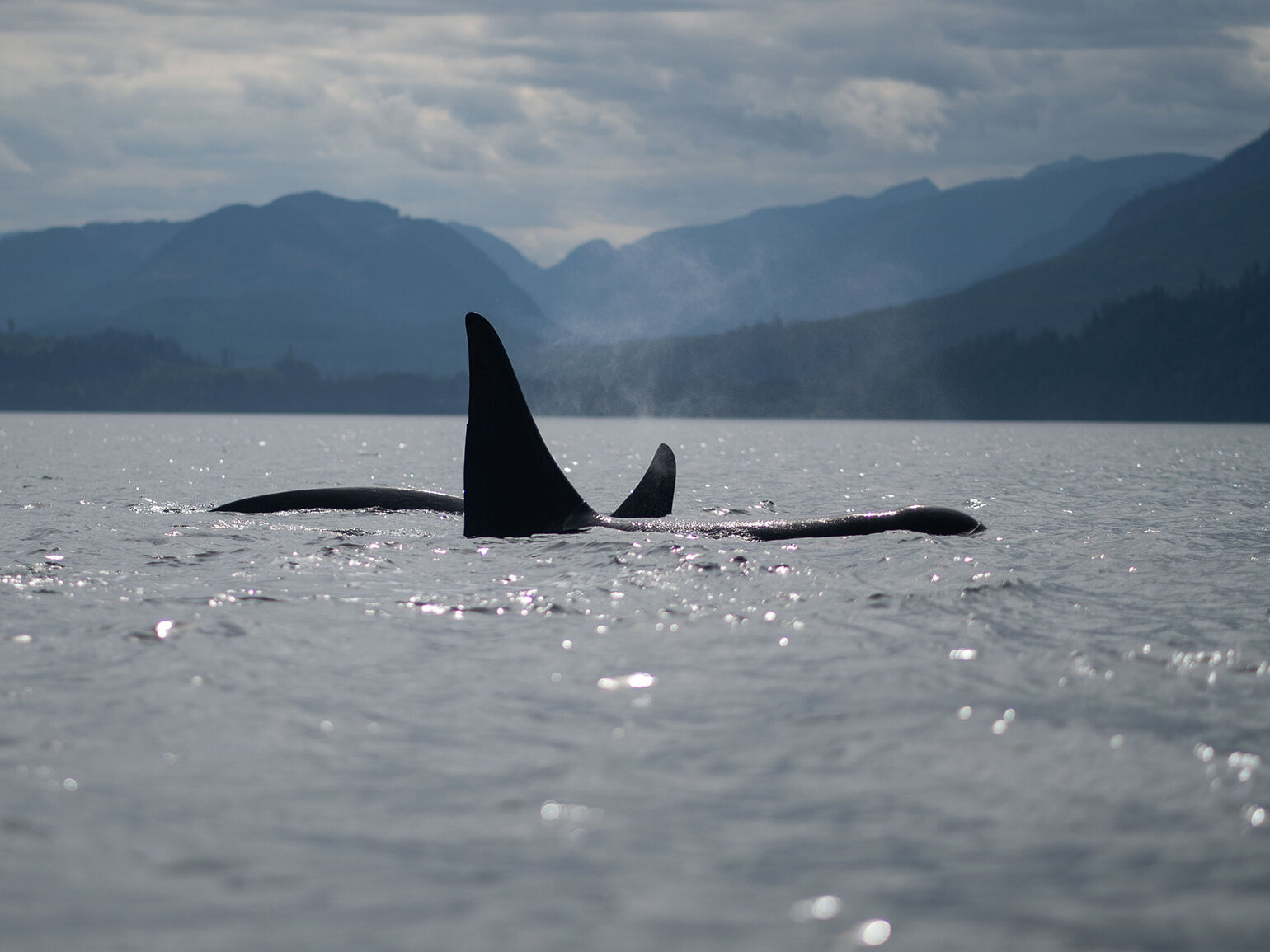
Two killer whales surfacing on the ocean.
Photo by John Kelsey.

Killer whale population health and dynamics

Killer whales live in small populations that from their size alone would appear to be vulnerable to negative effects of inbreeding.  We recently sequenced the entire genomes of 142 members of the Northern Resident population to directly  assess inbreeding, genetic diversity, and immune system strength. We are comparing this information in this dataset to one for Southern Residents compiled by NOAA in the United States. This will help us gain insight into the comparative health of these important fish-eating populations of killer whales. We are also finalizing a study of inbreeding in marine mammal-eating Bigg’s killer whales, which will inform our understanding of similarities and differences between North Pacific killer whale populations.

Environmental DNA to aid research focused on wild salmon and coastal wolves

Our research on wild salmon and coastal wolf populations has the potential to be expanded through the use of environmental DNA (eDNA) monitoring and analysis. Through eDNA, we can track and assess salmon populations and determine abundance and diversity. Using wolf scat samples we can identify specific individuals, their sex, and the prey consumed. By learning more about these important populations, we hope to drive policy change to protect biodiversity.

Research scientist Adam Warner holding two small beakers while wearing a lab coat in a lab.
Photo by Alex Harris / Raincoast Conservation Foundation.

Recent articles

dummy-img

Campbell caught in carbon-tax contradiction

Premier claims to embrace California’s green shift — but only when it suits him by Chris Genovali, The Edmonton Journal, Published: July 20, 2008 Victoria Times Colonist, Published: Sunday, July 13, 2008 The B.C. carbon tax has become a political lightning rod, diverting attention from the issue at hand — combating climate change. The fact…
dummy-img

The Potlatch Journey

By Misty MacDuffee, Biologist, Wild Salmon Program Rivers Inlet, April 2008 The pilings and ruins of old canneries dot the shoreline as I make my way to the head of Rivers Inlet. Like glimpses to the past, they stand as testament to the famed abundance of sockeye salmon that I only know through stories and…
dummy-img

Logging, Habitat Loss the Real Threat

by Chris Darimont Times Colonist Published: Saturday, June 28, 2008 Two recent Times Colonist articles have quoted Environment Minister Barry Penner and Victoria Jackson of the Vancouver Island Marmot Foundation, who promoted the oversimplified assertion that wolves and cougars are primary factors in the decline of Vancouver Island marmots.
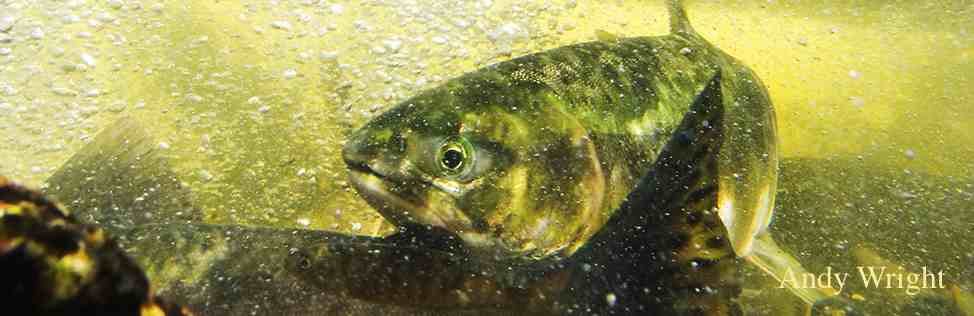
Pacific salmon swimming underwater along a creek bed.

Small streams surveys

Our interest in small streams stems from their importance to genetic diversity, as nutrient corridors for riparian habitats, food and access sources for bears and other predators, evolutionary opportunities, and fresh water rearing habitat for juvenile salmon, especially coho. When combined, small streams can also provide moderate salmon production which can be important for subsistence fisheries.
dummy-img

Open-net fish farms sell out the future

Times Colonist Thursday, May 17, 2007 Re: “The coastal economy: Let’s keep options open,” May 14. I am a fourth-generation Vancouver Islander and have lived long enough to recognize an outdated ideology. Dan Miller is privileged to have held such responsible positions as minister of forests, energy, mines and premier. Yet under his watch, coastal…
dummy-img

Grizzly viewing beats hunting

by Chris Genovali letters – Victoria Times Colonist and Vancouver Province Published: Sunday, June 15, 2008 Re: ” Poll: Ban grizzly hunting in B.C.,” June 11. British Columbians have been strongly opposed to the grizzly hunt for several years. In 2001, the International Fund for Animal Welfare commissioned Strategic Communications to conduct a province wide…
dummy-img

Fear and Loathing: Is it better to be a wolf in Canada than the U.S.?

By CHRIS GENOVALI Monday Magazine May 28 2008 Having recently attended the 20th annual North American Wolf Conference in Pray, Montana, it has been particularly dismaying to learn that literally days after the gray wolf was de-listed from the Endangered Species Act in the United States, trophy hunters in Wyoming had already shot numerous wolves.
dummy-img

No thanks….. dirty oil not wanted

Calgary Herald Published: Saturday, May 17, 2008 Re: “Premier counters dirty oil threat,” May 9. Premier Ed Stelmach is in for a rude awakening if he thinks he’s going to snap his fingers and build a pipeline to the north coast of British Columbia in order to send oilsands products to Asia.