Conservation Genetics Laboratory 

Our conservation genetics research addresses threats to cetaceans, fish, and coastal carnivores. 

The Conservation Genetics Lab is an integral part of Raincoast’s efforts to protect the land, waters and wildlife of coastal BC. The DNA and RNA analysis we perform provides our scientists with reliable insights into the population structure, health, diets, and resilience and genetic isolation of coastal species. The lab works closely with our Cetacean Conservation Research Program and also helps answer important questions for our other conservation initiatives. 

Two hands wearing blue gloves holding and organizing beakers.
Research scientist Adam Warner holding two small beakers while wearing a lab coat in a lab.

Cutting edge genetics and genomics analysis

The Raincoast Conservation Genetics Lab is equipped with a complete set of instrumentation to conduct molecular biology and genetics, including cutting-edge DNA sequencing technology. Our Research Scientist, Dr. Adam Warner, has extensive experience in genetics, genomics and DNA sequencing, has set up our lab space and has begun to carry out this research under the guidance of our Cetacean Research Program directors Dr. Lance Barrett-Lennard and Dr. Valeria Vergara. The lab works alongside Fisheries and Oceans Canada, which is hosting our lab space at the Pacific Science Enterprise Centre.

Understanding killer whale diet

A lack of sufficient Chinook salmon in the diets of Southern and Northern Resident killer whales has been linked to declines in population health. Our lab has the ability to extract and analyze salmon DNA from Resident killer whales feces, to identify the salmon stocks of most importance to the whales. Since we can identify the individual whales that produced fecal material genetically, we can link other health metrics such as stress hormone levels (also found in the fecal material) to individual killer whales. 
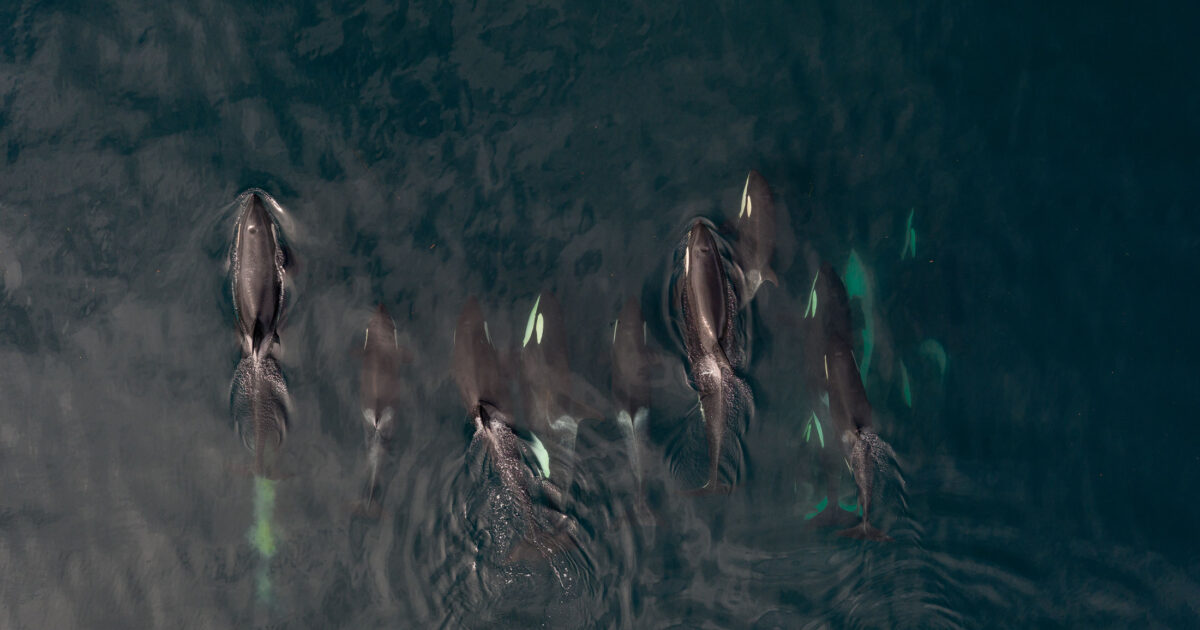
Overhead photo of a pod of killer whales swimming in the ocean.
Photo by Raincoast Conservation Foundation, taken under SARA Research License XMMS-2-2022.
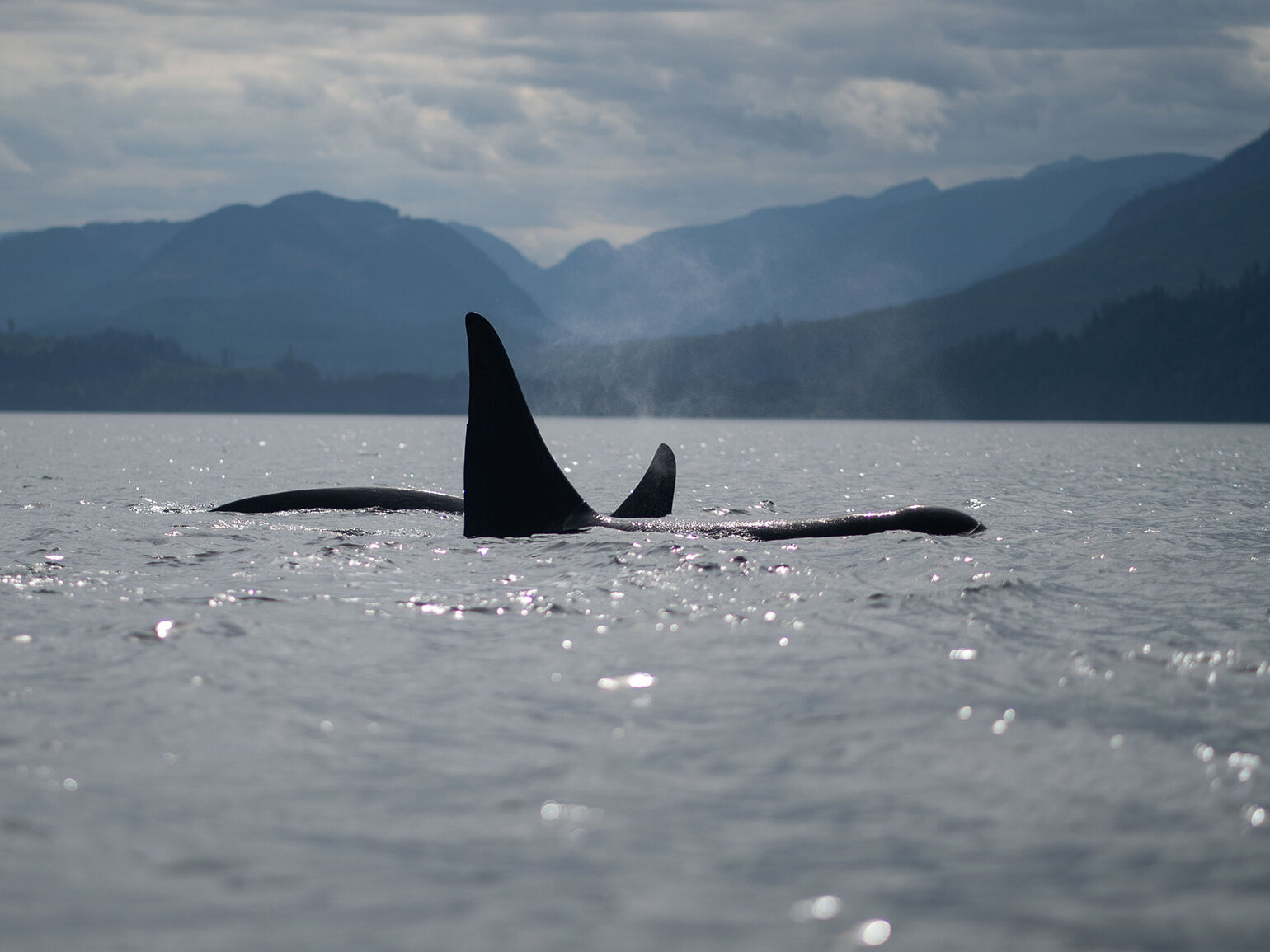
Two killer whales surfacing on the ocean.
Photo by John Kelsey.

Killer whale population health and dynamics

Killer whales live in small populations that from their size alone would appear to be vulnerable to negative effects of inbreeding.  We recently sequenced the entire genomes of 142 members of the Northern Resident population to directly  assess inbreeding, genetic diversity, and immune system strength. We are comparing this information in this dataset to one for Southern Residents compiled by NOAA in the United States. This will help us gain insight into the comparative health of these important fish-eating populations of killer whales. We are also finalizing a study of inbreeding in marine mammal-eating Bigg’s killer whales, which will inform our understanding of similarities and differences between North Pacific killer whale populations.

Environmental DNA to aid research focused on wild salmon and coastal wolves

Our research on wild salmon and coastal wolf populations has the potential to be expanded through the use of environmental DNA (eDNA) monitoring and analysis. Through eDNA, we can track and assess salmon populations and determine abundance and diversity. Using wolf scat samples we can identify specific individuals, their sex, and the prey consumed. By learning more about these important populations, we hope to drive policy change to protect biodiversity.

Research scientist Adam Warner holding two small beakers while wearing a lab coat in a lab.
Photo by Alex Harris / Raincoast Conservation Foundation.

Recent articles

underwater photo of sockeye salmon in BC river

Would a grizzly bear certify this fishery?

To protect BC’s wild sockeye salmon and truly drive conservation in the world’s oceans, the Marine Stewardhip Council (MSC) needs to address the structural flaws in their certification process and commit to incorporating ecosystem objectives for marine and terrestrial environments.
A black bear laying on the ground.

Capturing Curious Carnivores

Now that this year’s field crew for the salmon carnivore project has disbanded I find myself reminiscing about the experience by obsessively cycling through photos. Though a vast amount of photos were taken during the field season, wildlife images captured by our trail cameras stand out as especially extraordinary. There’s something intensely captivating about watching…
A man pointing to a device on a tree.

How much is a grizzly bear’s life worth?

As the field season draws to a close, I finally have the time to reflect on some of our experiences. As it appears, somebody else is doing some reflection. We are pulling some of our remote cameras and inspecting the images of bears at our non-invasive hair-snagging stations.
An oil rig is on fire in the ocean.

Hands Across the Sand

Hands Across the Sand is a movement made of people of all walks of life and crosses political affiliations. This movement is not about politics; it is about protection of our coastal economies, oceans, marine wildlife, and fishing industry. Let us share our knowledge, energies and passion for protecting all of the above from the…
A killer whale spy hopping

Feds sued over lack of protection for killer whales

The trial to protect BC’s resident killer whales and their critical habitat began Tuesday June 15, 2010 in the federal courthouse in Vancouver, BC.  Ecojustice is representing Raincoast and eight other conservation groups.  The following links will give you more information about the story and the case. The halls of Justice: Day 1 (Blog) BCs…
Two orca whales swimming in the water.

The Halls of Justice: Day 1

The ancient Goddess of Justice, Themis, stands with her scales; an avenger in her earliest portrayals, but evolved to wear a blindfold in more recent times to represent the principles of modern law. For me, today’s goddess of justice is standing in the middle of a federal courtroom in downtown Vancouver, conveying the facts and…
A group of people running in a marathon.

Victoria Marathon pledge program celebrates five years

Victoria News By Travis Paterson The run for $250,000 is on. Last week, the team behind the GoodLife Fitness Victoria Marathon announced a total of 18 charities have been selected to the event’s 2010 Charity Pledge Program (CPP). That’s already seven more charities than last year, said GFVM general manager Cathy Noel. “We have so…
A group of orca whales swimming in the ocean.

BC’s killer whales get their day in court

The Georgia Straight  – Commentary By Misty MacDuffee and Chris Genovali As British Columbia’s southern resident killer whales return to local waters, many scientists and citizens are growing increasingly concerned for their future. Even with new arrivals in local pods, the population still needs to show clear signs of recovery.