National Energy Board fails killer whales
The NEB’s approval of Kinder Morgan’s TMX jeopardizes the survival of BC’s endangered southern resident killer whales, increasing the probability that they will ultimately go extinct, asserted Raincoast.


Raincoast is a team of conservationists and scientists empowered by our research to safeguard the lands, waters and wildlife of coastal British Columbia. Read more about Raincoast.

The NEB’s approval of Kinder Morgan’s TMX jeopardizes the survival of BC’s endangered southern resident killer whales, increasing the probability that they will ultimately go extinct, asserted Raincoast.

New study from Raincoast and partners finds that when salmon abundance is low, human conflict with bears increases.

A letter by Raincoast researchers published in Ocean & Coastal Management documents the controversy around the commercial ‘roe herring’ fishery.

At Sea with the Marine Birds of the Raincoast shares the unique story of conservation scientist Dr. Caroline Fox as she sails thousands of kilometers along the BC coast, surveying marine birds.

BC wild salmon conservation groups submit concerns to DFO for 2016 fishing plan.
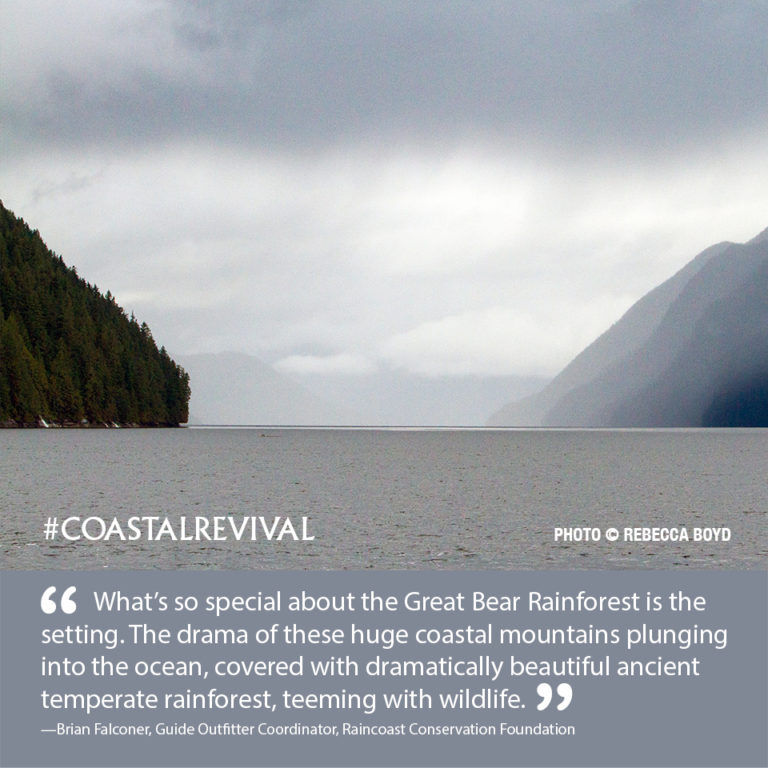
A new five-part documentary series, Coastal Revival, tells how First Nations, conservationists, researchers and ecotourism are combining to protect some of the BC’s most emblematic wildlife.

Raincoast biologists are at the Salish Sea Ecosystem Conference this week discussing their work in the Salish Sea and the Fraser Estuary.

B.C.’s spring grizzly bear hunt has opened for another year, with the government authorizing a limited number of bears to be killed in parts of the province – including the Great Bear Rainforest.

A Raincoast researcher and his university collaborators document how raccoons respond to the threatening sounds of large carnivores, and how this “landscape of fear” affects the health of ecosystems.
Raincoast PhD candidate, Justin Suraci and colleagues publish study from BC’s Gulf Islands on the role of fear in maintaining healthy ecosystems.

The fear that top predators such as cougars, wolves and other large carnivores inspire in other animals cascades down the food chain and is critical to maintaining a healthy ecosystem.

A new study by Raincoast scientists and collaborators demonstrates that the fear top predators inspire can have cascading effects down the food chain critical to maintaining healthy ecosystems.