A wave of community support for hosting coastal listening stations
Let’s talk about our hydrophone stations and how you can help.
In the days following the CBC article featuring Raincoast’s two coastal camera-and-hydrophone livestream monitoring stations, our inbox at Raincoast lit up.
Emails poured in from homeowners eager to offer their waterfront properties as monitoring sites – from Howe Sound to Bamfield, from the Southern Gulf Islands to the Sunshine Coast, some even provided GPS coordinates.
This outpouring of enthusiasm has been extraordinary. It speaks to the deep concern British Columbians feel for whales, and to the desire many people have to play a direct role in their protection.
What do our hydrophone stations actually do?
Amid the excitement, we want to clarify the purpose of our hydrophone installations.
Raincoast’s stations are designed to:
- Record underwater noise and track how sound levels change over time.
- Detect marine mammals acoustically to understand how frequently different areas are used.
- Support outreach and education, allowing the public to tune in online and hear both the beautiful underwater soundscape and the dramatic rise in noise when vessels pass. Curious? Tune in to our Pender Whale Sanctuary Station, and to our Sunshine Coast Listening station!
- Contribute long-term data to help advance conservation measures for marine mammals.
You can read more about what it takes to run these systems in our story Hydrophone diaries: eavesdropping on the soundscapes of the Salish Sea.
You can help us do our conservation science work.
What do these hydrophone stations not do? (Yet!)
The CBC article referenced several marine technologies, so some readers understandably came away with the impression that our systems are intended to prevent vessel strikes.
While thermal cameras can be used to detect whale blows for strike avoidance, and while some hydrophone networks in BC contribute real-time acoustic detections to tools like the Whale Report Alert System (WRAS), Raincoast’s hydrophones are not currently part of those systems. Our stations are built for monitoring and scientific research, not real-time mitigation.
Are we expanding?
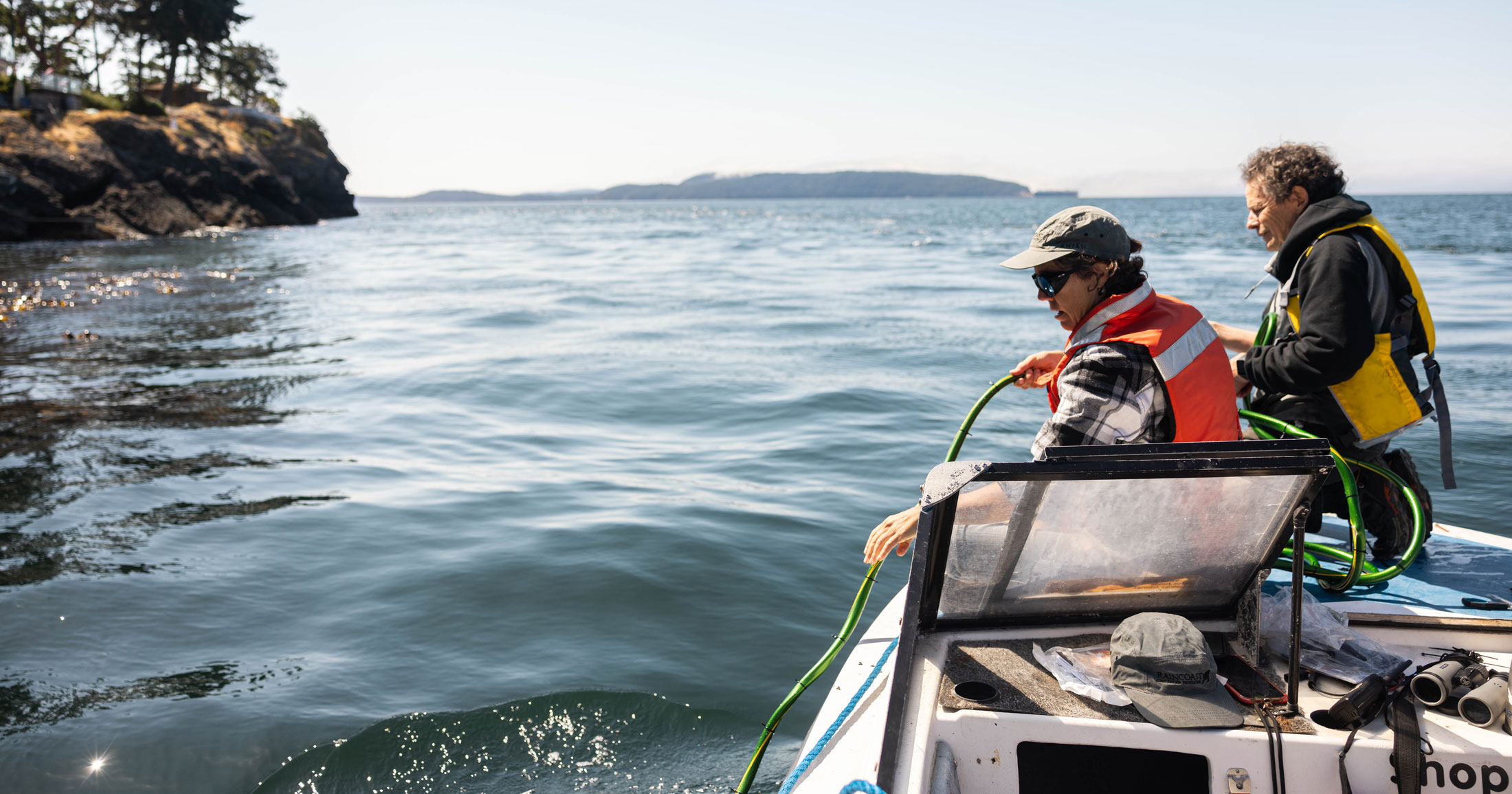
Not yet. A full hydrophone system and deployment can cost between $15,000 to $20,000, and the equipment requires regular, hands-on maintenance: from rebooting after power outages to replacing full hard drives to troubleshooting self-noise.
With two existing stations, most of our current capacity is focused on maintaining and improving those long-term sites.
A heartfelt thank-you
Even though we cannot expand to new locations at this time, we want to express our gratitude to every person who wrote to us. The level of community engagement we saw this week is inspiring, and it reinforces something we feel every day: people care deeply about the whales that share these waters with us.
We will continue working to sustain and grow this program responsibly, and we will keep the offers we received on file as we explore future opportunities.
How you can help
A good way to stay connected and get updates and follow the evolution of this initiative, and other programs, is to subscribe to our newsletter. We often have action items and the more people who join our newsletter and support our campaigns, the easier it is for us to make change.
A powerful way to support our work is to become a donor. Having a consistent stream of income allows us to plan ahead to achieve our scientific research, conservation advocacy efforts, and public outreach goals. Monthly giving is a powerful way to help us make change and do conservation science.
We all at Raincoast extend the most heartfelt thank you, truly, as we’ve been blown away by the enthusiasm to help move this important work forward.
You can help
Raincoast’s in-house scientists, collaborating graduate students, postdoctoral fellows, and professors make us unique among conservation groups. We work with First Nations, academic institutions, government, and other NGOs to build support and inform decisions that protect aquatic and terrestrial ecosystems, and the wildlife that depend on them. We conduct ethically applied, process-oriented, and hypothesis-driven research that has immediate and relevant utility for conservation deliberations and the collective body of scientific knowledge.
We investigate to understand coastal species and processes. We inform by bringing science to decision-makers and communities. We inspire action to protect wildlife and wildlife habitats.