Effects of boat- and land-based ecotourism on bears
This body of evidence will help guide ecotourism and conservation.



This body of evidence will help guide ecotourism and conservation.
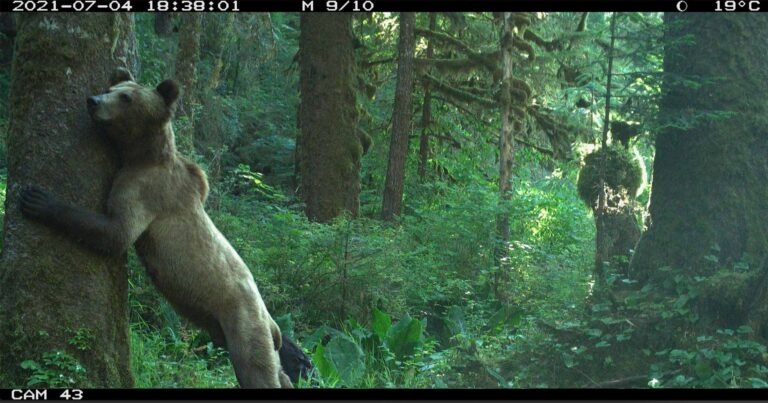
Remote cameras are assisting researchers at the Raincoast Applied Conservation Science Lab to answer pressing conservation questions along the coast of British Columbia. These cameras, deployed and managed in collaboration with First Nations partners, create unique possibilities for non-invasive wildlife monitoring.

A recent journal article, published in Methods in Ecology and Evolution, draws attention to the need for consistent and high standards for animal welfare in research, and the important role that journals have in maintaining ethical standards in published research. The authors, joined by Raincoast scientists Kate Field, Paul Paquet and Chris Darimont, stress that…

Patience, attention to detail, and the ability to adapt are a few human qualities that many strive to attain. Grizzly bear field research here on the Atnarko River, Nuxalk Territory, affords our crew the opportunity to develop those traits and put them to the test…

Transitioning between seasons can often push your senses to work overtime. This is especially true in summer and autumn in the Atnarko River corridor, where the river comes alive with Chinook, chum, pink, sockeye, and coho salmon runs. The smell of a river containing spawned-out fish is unforgettable, and one I have grown fond of….

This has been a time of remarkable accomplishment for the Raincoast Applied Conservation Science Lab at the University of Victoria. The research that the lab produces is a dynamic mix of population analyses, biogeography, marine-terrestrial interactions and much more, all rooted in a ‘wildlife welfare’ ethic. Collaboration with Indigenous communities forms the hallmark of much of this work, which is being directly applied…