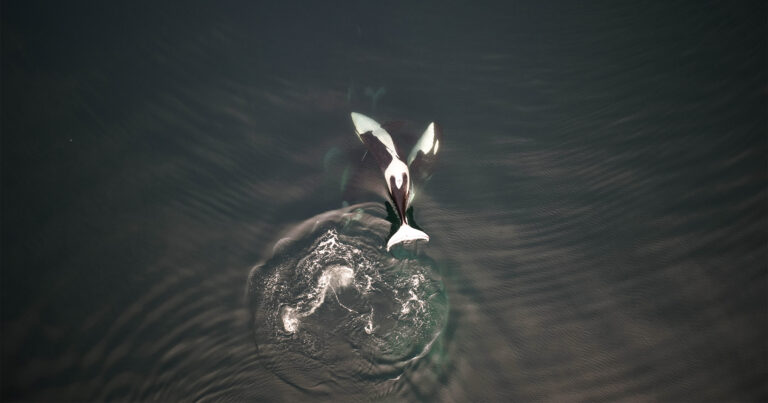
Guide government actions on Southern Resident killer whale recovery: Take the federal survey before February 12, 2024
This federal survey will take around 20 minutes.
What's new // Investigate and inform
Indepth essays and expert analyses from our researchers.
This federal survey will take around 20 minutes.
DNA can answer many questions about a killer whale’s health and family tree.
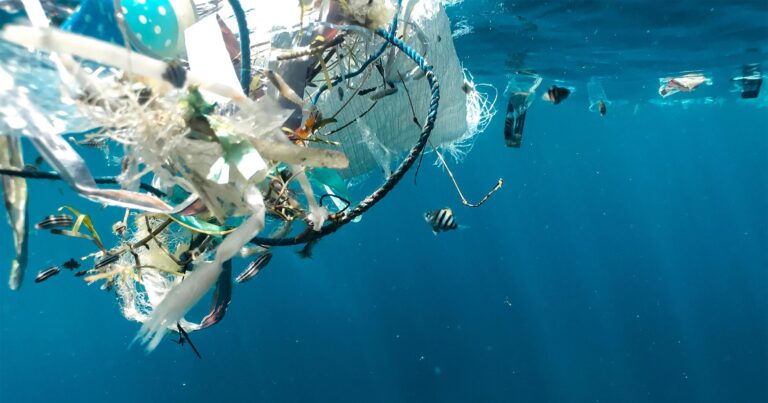
Canadians – and our oceans – need robust protection from plastic pollution.
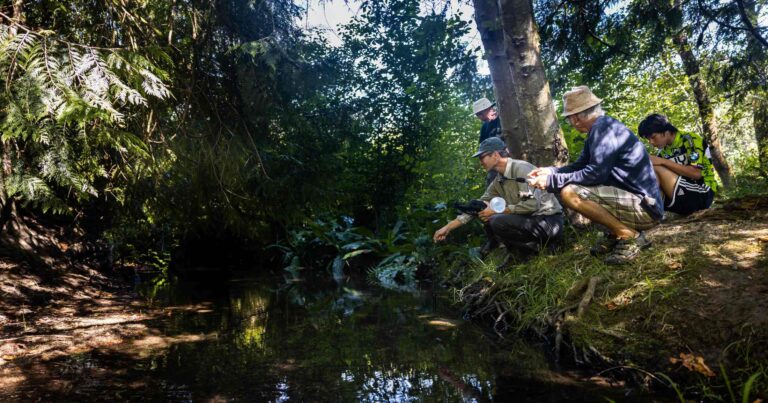
The key to restoring and protecting aquatic environments for people and wildlife is a high quality monitoring program upon which communities and managers may act.
Connectivity is vitally important at all sorts of scales over time and space.
This letter urges caution in interpreting the causes and nature of the whales’ behaviours.
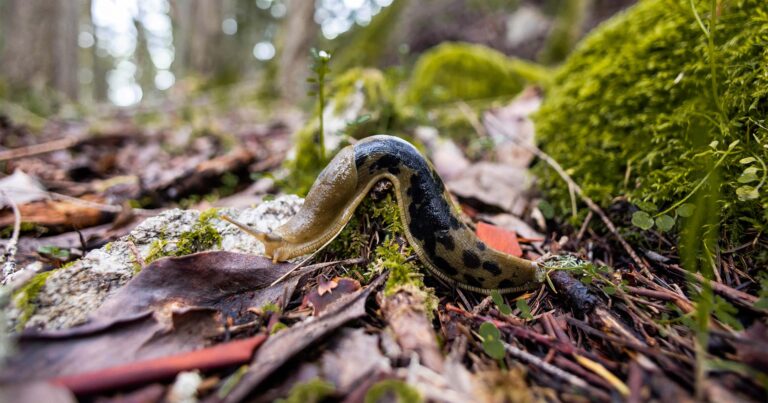
In this article, Dr. Shannon Berch and Dr. Paul de la Bastide explain some of the deep relationships between fungi and other species and why it is so essential that we learn more about them.
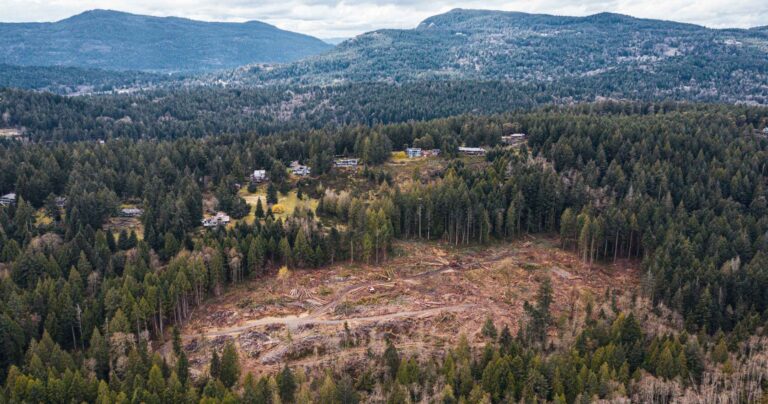
Islands in the Salish Sea are experiencing a worsening seasonal water deficit.
Biosolids are nutrient rich, organic solid or semi-solid materials recovered from wastewater processing and their management is a growing challenge.
How studying animal culture can inform conservation.
Ecological communities around the Salish Sea range from iconic conifer-dominated forests to grasslands. None of these diverse communities recognize political boundaries, so how do habitats on the American side of the border compare to those in southern BC?
In New Zealand and Quebec, communities have successfully pushed for some form of Rights of Nature laws to be accorded to ecosystems around them.