

Marine Bird Surveys
In 2005, Raincoast began 4 years of boat-based, systematic surveys of BC’s coastal waters to determine the at-sea abundance and distribution of marine birds. This work is part of our efforts to achieve long-term protection for maritime animals and their habitats. Over 10,000 km of ocean trackline were surveyed between 2005 and 2008 collecting roughly 18,000 ‘sightings’ (totalling over 100,000 individual birds) in more than 70 species.
Published Analysis
In 2016, we published at-sea distribution and abundance results for BC marine birds, along with a risk assessment for chronic oil spills.
Fox, C.H., P.D. O’Hara, S. Bertazzon, K. Morgan, F.E. Underwood and P.C. Paquet. 2016. A preliminary spatial assessment of risk: Marine birds and chronic oil pollution on Canada’s Pacific coast. Science of the Total Environment Volume 573, 15 December 2016, Pages 799–809
Download PDF until October 2016 http://www.sciencedirect.com/science/article/
Maps and Reports
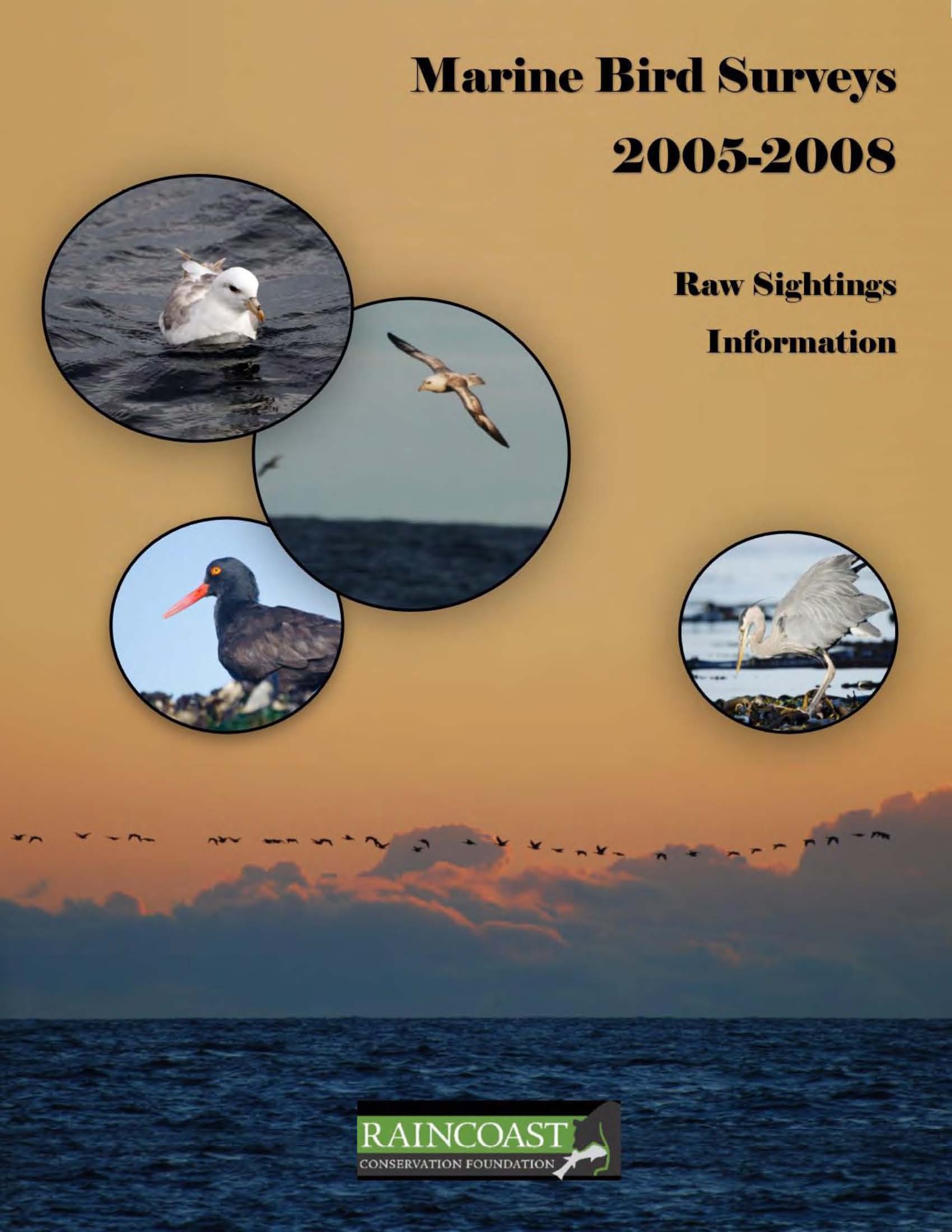
The raw sightings data and maps can be viewed in the report Marine Bird Surveys 2005-2008 Raw Sightings Information.
Marine Bird Survey Report (PDF)
This information was then used in the popular report, What’s at Stake: the Cost of Oil on BC’s Priceless Coast.

Dr. Caroline Fox has also written a popular book At Sea with the Marine Birds of the Raincoast based on her experience as a marine bird biologist surveying the BC coast.

The poster below summarises the sightings and scientific methods behind Raincoast’s seabird data analysis.

A slideshow of common marine birds we encountered on our surveys.