

Wild Chinook salmon are more efficient predators than hatchery fish at Roberts Bank, Fraser River Estuary
New research finds eelgrass habitat at Roberts Bank supports important prey for both wild and hatchery Chinook, making it a critical spot for outmigrating juvenile salmon.
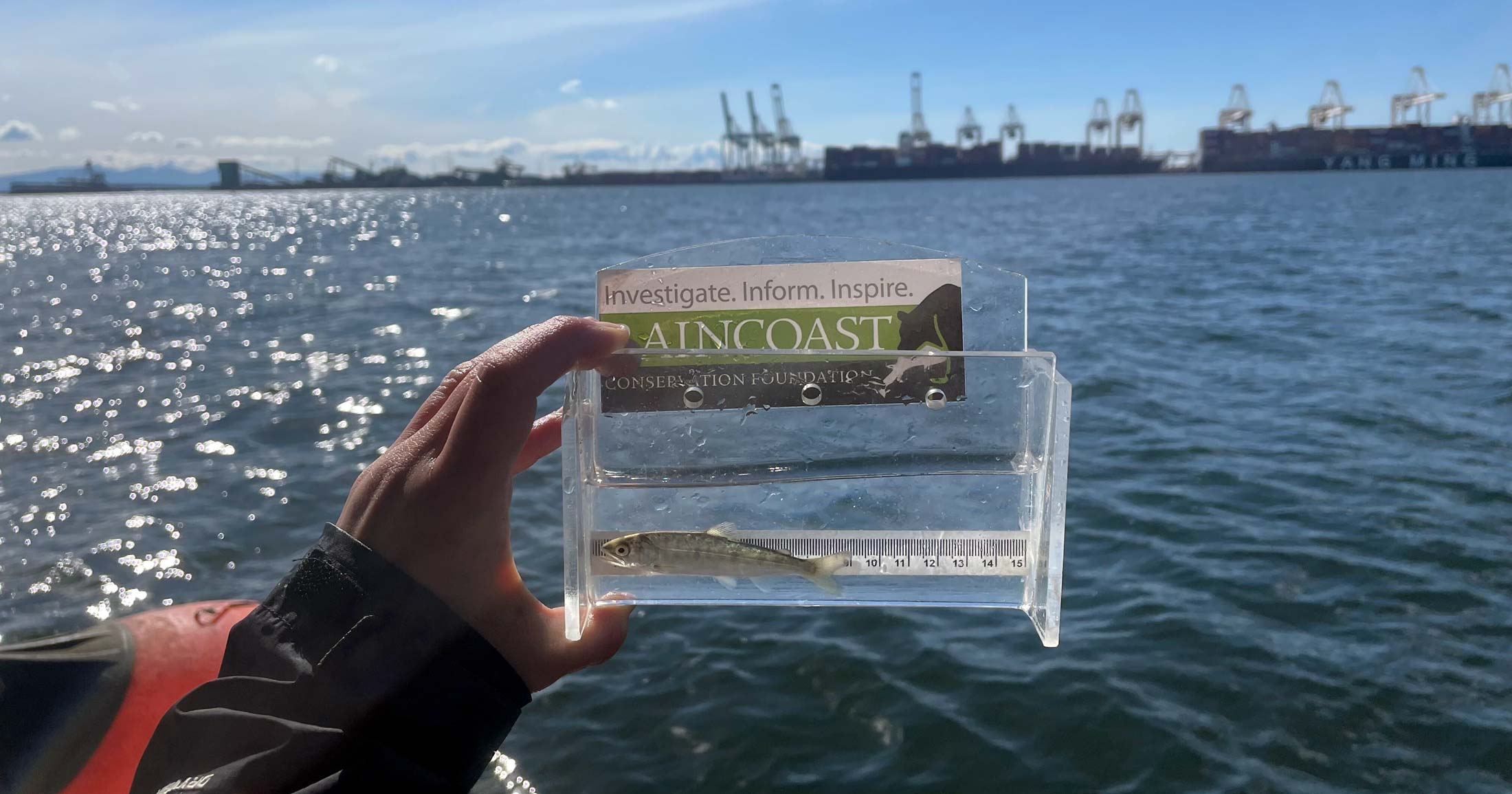
SIDNEY, BC CANADA – New research from the University of British Columbia and Raincoast Conservation Foundation finds that wild juvenile Chinook salmon are better foragers than their hatchery counterparts in the Fraser River Estuary. Published in the Canadian Journal of Fisheries and Aquatic Sciences, the study compared diets of wild and hatchery Chinook salmon rearing in Roberts Bank eelgrass habitat.
“We found that both juvenile wild and hatchery Chinook salmon relied heavily on small forage fish like Pacific sand lance and herring as their primary prey” said Paige Roper, the study’s lead author and biologist with Raincoast Conservation Foundation
Before juvenile Chinook migrate into the ocean, they spend weeks to months in the estuary, where they utilize certain habitat to grow rapidly and acclimate to salt water.
British Columbia’s Fraser River has the province’s largest salmon bearing estuary. Its diverse marshes, sandflats and eelgrass beds offer unique feeding opportunities for salmon. What and how much these young fish consume in the estuary contributes to their ocean survival, where predators are more common and food is more difficult to find.
Understanding this crucial transitional life stage between fresh and salt water, and the conditions that support these fish is important because Chinook salmon are struggling with many threats. 19 of 28 southern BC Chinook populations are currently listed as Threatened or Endangered due to factors from habitat loss to climate change and even competition for food with hatchery fish. In the Lower Fraser, 85% of floodplain habitat has been lost, which makes the estuary habitat that remains more important than ever. Yet development pressure continues, including the Roberts Bank Terminal 2 project and the Pacific Link Pipeline, both of which would be located next to or within the eelgrass beds in this study.
To get both a snapshot of recent meals and a longer-term picture of diet, the researchers combined two methods. Examining stomach contents show what a fish ate in the last day or so. Analyzing stable isotopes in body tissue reflect what it ate over the previous weeks to months. Over 2021 and 2022, the team examined 179 juvenile Chinook from estuary habitats using these methodologies.
On average, the team found that wild Chinook had approximately 51% fuller stomachs compared to hatchery fish, even though hatchery fish were generally larger” continued Roper “This means that the larger sizes of hatchery Chinook may not contribute to better hunting. Wild fish ate a wider variety of prey, including energy-rich insects, and began eating fish at smaller sizes.”
Eelgrass habitat was important for both wild and hatchery Chinook in Roberts Bank. Of the three habitats studied in the Fraser River estuary, Chinook only consumed energy-rich fish prey in eelgrass beds. The fish prey items Chinook consumed were young stages of Pacific sand lance and herring. These important forage fish also have limited habitat, with Pacific sand lance known to spawn on only 5% of the Salish Sea’s intertidal shoreline, some of which is located adjacent to this research study area. “Conserving Pacific sand lance and herring at Roberts Bank is essential to sustaining both wild and hatchery Chinook populations,” said Dave Scott, Lower Fraser Program Director, “Protecting eelgrass habitat where these prey reside is important for juvenile Chinook salmon.”
Citation
Roper PET, Scott DC, Hunt BPV, MacDuffee M, Rhodes S, Hinch SG. 2026. Dietary analysis of wild and hatchery juvenile chinook salmon ( oncorhynchus tshawytscha ) in the Fraser river estuary reveals ontogenetic and foraging differences. Canadian Journal of Fisheries and Aquatic Sciences. 83:1–17. doi:10.1139/cjfas-2026-0044. [accessed 2026 Nov 2]. https://doi.org/10.1139/cjfas-2026-0044.