Listening to protect
Our ongoing projects allow us to hear cetacean vocalizations in real time to better understand how their communication is being impacted.
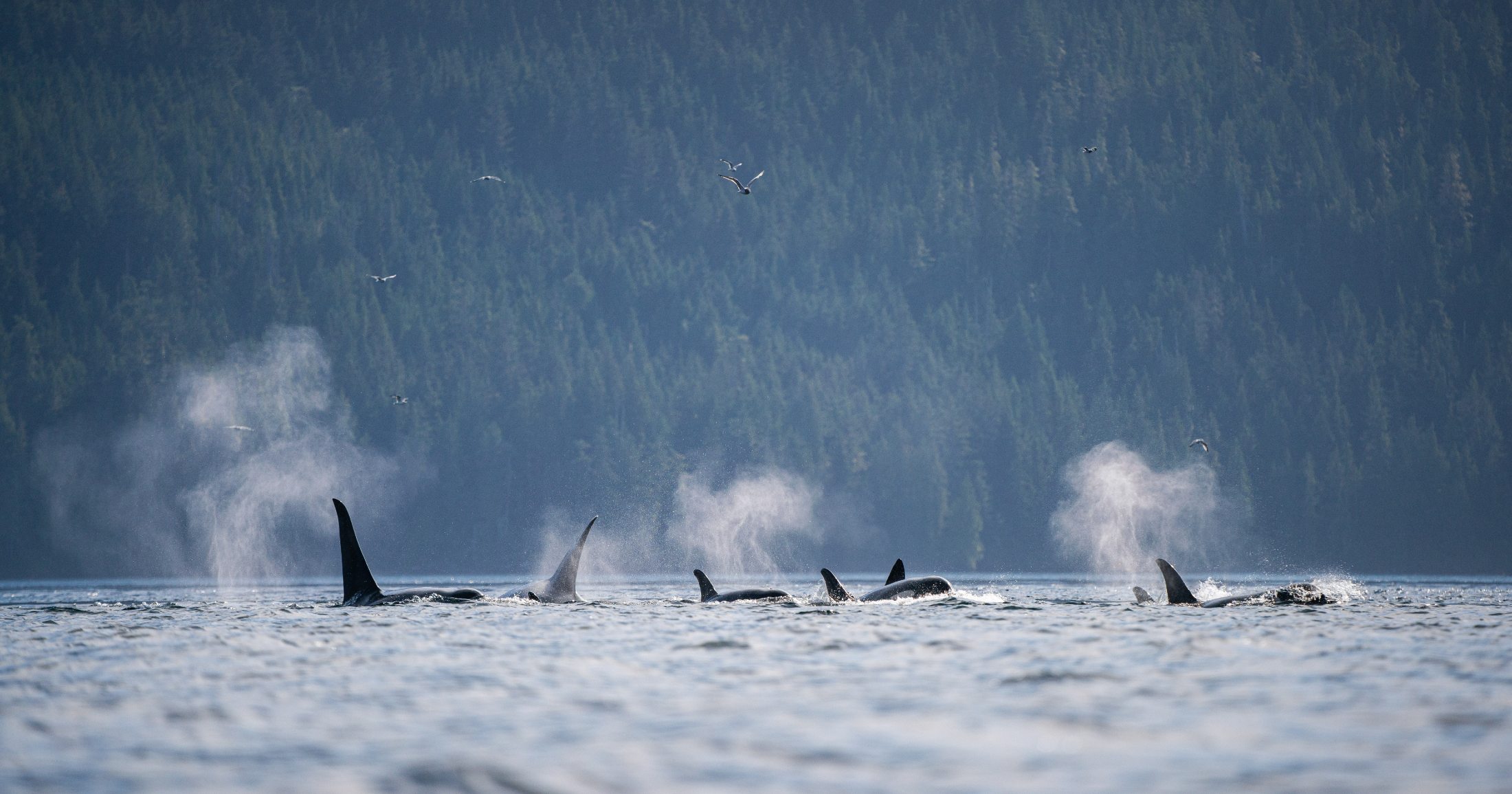
This summer, Raincoast and Earth Species Project (ESP) launched a pilot study to better understand killer whale communication. Three ESP team members joined our researchers aboard Achiever to test a new method of data collection that involved pairing high resolution drone footage of whale behaviours and interactions with simultaneous underwater recordings. Together, we are building a rich, ground-truthed dataset to help train AI models that can uncover patterns in killer whale communication, and reveal how it may be affected by underwater noise.
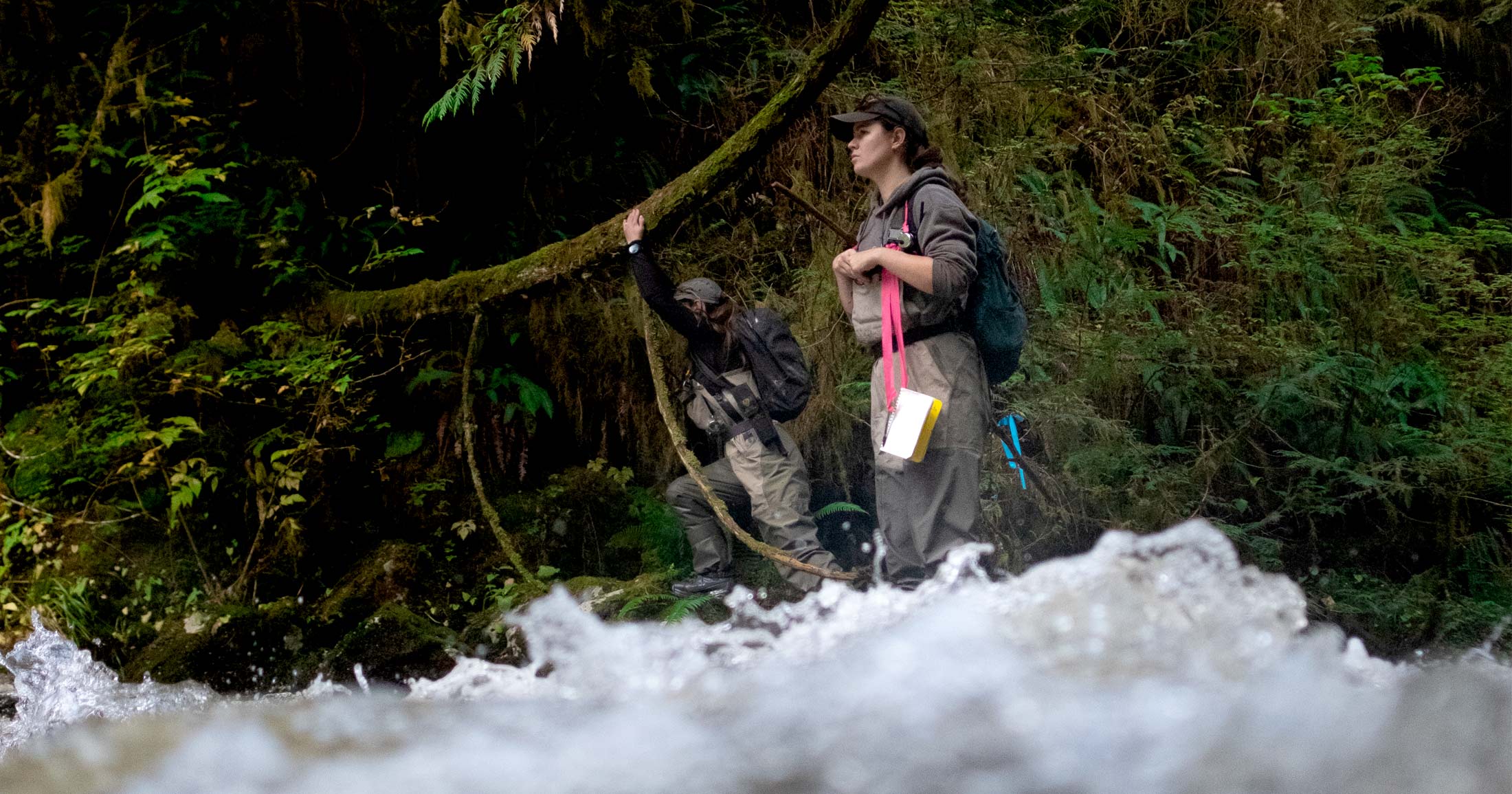
Our Pender Island underwater monitoring station, installed in 2023 in the Vessel Restricted Zone for Southern Resident killer whales (SRKW), continues to livestream whale vocalizations and videos while gathering data for collaborative studies with the Saturna Island Marine Research and Education Society (SIMRES). We’ve completed a study on SRKW acoustic presence and the impacts of noise on their calls, with researchers stationed on a nearby cliff to monitor whale activity, vessel and fishing violations, as well as ship traffic. A full report is coming soon.
We also re-deployed our Sunshine Coast listening station (after the first one was snagged by a fishing boat), restoring a critical node in a region where humpback whales have been steadily returning since 2015.
Another study we’ve completed, in collaboration with the North Coast Cetacean Society, “Singing to be Heard,” examines how humpback whales develop their songs on North Pacific feeding grounds. The manuscript is now being prepared for publication.
We’ve also launched a new collaboration with the University of Windsor, Oceans North, and Frontier North Adventures to study the vocal and social behaviour of Churchill River belugas. With increasing Arctic shipping, there is an urgent need to document baseline noise levels and beluga behaviour before the Churchill River estuary’s soundscape is fundamentally altered.
Aerial insights into whale health
This year we wrapped up fieldwork on our long-running Northern Resident killer whale photogrammetry project, but analysis continues. We just submitted a paper, titled “Costs of maternal care revealed through body condition in Northern Resident killer whales” and presented body condition observations at the 2025 Orca Symposium in Tarifa, Spain.
This is an excerpt from our annual report, Tracking Raincoast into 2026.