Pacific Herring: Underpinning the coastal foodweb
Other than salmon, few species in BC hold the ecological, cultural and economic importance of Pacific herring, Clupea pallasi.
As one of the most abundant fishes in BC’s coastal waters, Pacific herring are a cornerstone of the marine foodweb and support a diversity of marine predators. In addition to wildlife, they have sustained coastal First Nations communities for many thousands of years. In decades past, Pacific herring were once the focus of largest commercial fishery in BC, and eclipsed all salmon species combined.

From their beginnings as tiny, translucent eggs scattered along the shore to dense schools consisting of hundreds of tonnes of energy-rich adults, Pacific herring are fed upon by a diversity of marine predators that include marine birds, mammals, fishes and invertebrates. For example, off the coast of Vancouver Island, adult herring comprise major proportions of predator diets (e.g. Chinook Salmon – 62%, Coho Salmon – 58%, Lingcod – 71% and Harbour Seals – 32%, source: DFO).

As one of the great fishes of the North Pacific Ocean, Pacific herring still underpin much of the coastal foodweb. Unfortunately, like many fishes throughout the world’s oceans, Pacific herring have been heavily exploited. BC’s herring populations collapsed in the 1960’s, in large part due to rampant overfishing. Following decades of rebuilding, herring declined again in the late 1990s and into the 2000s.
Of the five major herring populations identified by DFO, three (Central Coast, Haida Gwaii and West Coast Vancouver Island) had been subject to longstanding commercial fisheries closures due to persistently low biomass. In 2014 and 2015, with evidence of modest and still uncertain herring population recoveries, the Minister of DFO announced the opening of these three areas over the explicit objections of multiple coastal First Nations. Primary concerns over these commercial fisheries include insufficient herring population recovery to support commercial harvest, flawed and/or uncertain population model forecasts, an outdated management framework, and a failure to consult, negotiate, and accommodate Aboriginal Rights and Title. Of three legal challenges launched by coastal First Nations, two halted the fisheries on the grounds that the Minister’s decision posed potential irreparable harm.
Understanding ecosystem linkages
Herring are a cornerstone species in marine ecosystems. These small, silvery fish fuel marine foodwebs and directly support predators such as salmon, pinnipeds, whales and a large diversity of marine birds. They also stage one of the natural world’s most spectacular events with their annual spawn.
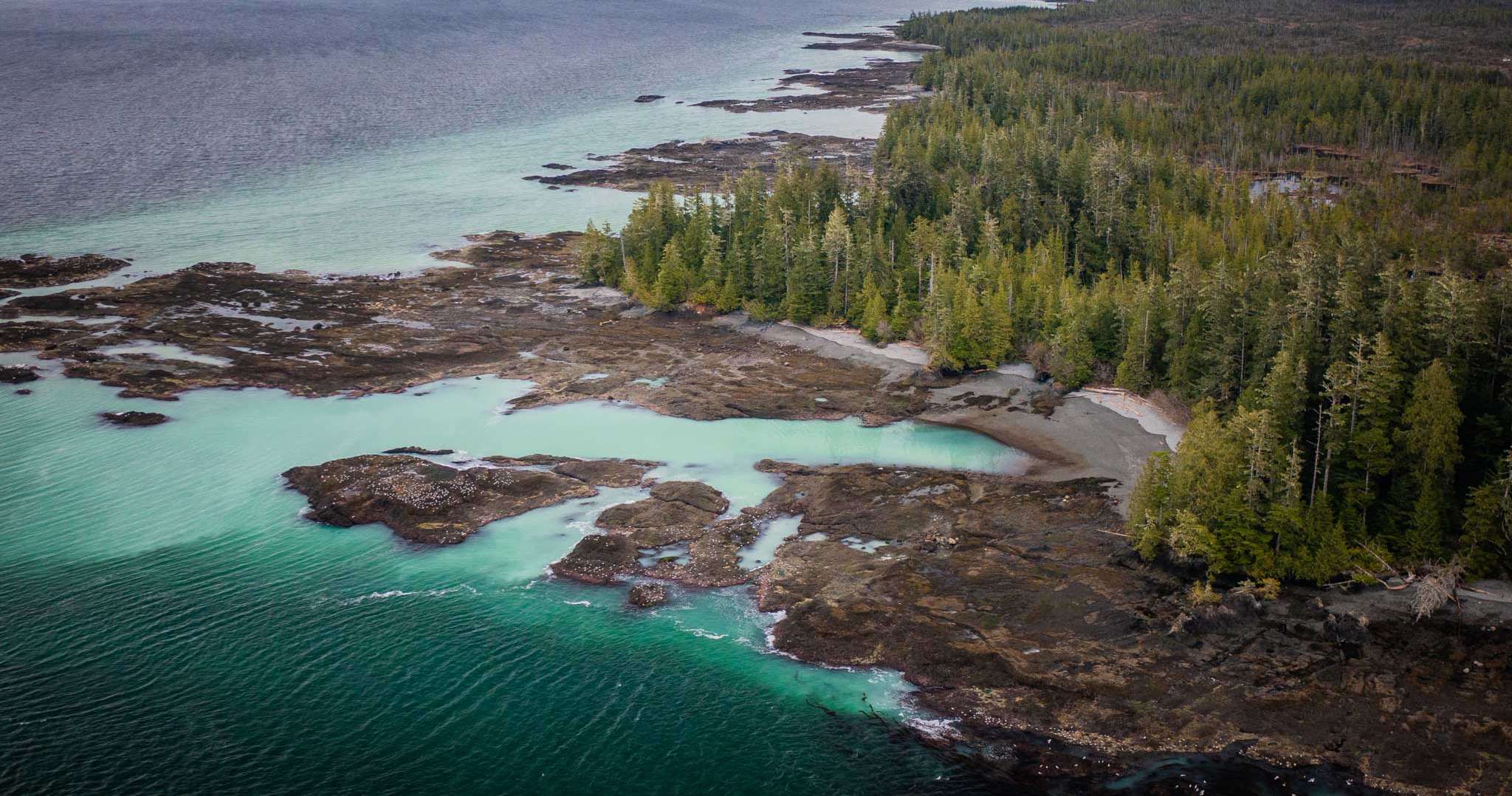
Each year, tens of thousands of tonnes of herring migrate from offshore waters to more sheltered nearshore bays and estuaries where they spawn en masse. Male herring release milt (containing sperm), which colors nearshore waters a chalky white, sometimes for many kilometers of coastline. In this opaque water, female herring lay eggs upon the intertidal and nearshore vegetation, which often includes eelgrass and kelp. These dense aggregations of spawning herring – and their deposited eggs – often attract tremendous numbers of predators and scavengers.
In some areas, millions of marine birds, hundreds of sea lions, seals and dozens of humpback and grey whales actively forage for weeks. As part of our at-sea marine bird surveys, we had the opportunity to witness multiple herring spawn events at locations along the BC coast. The spawns we observed were several orders of magnitude smaller than in previous years, but which still attracted marine mammals and birds, including Bald Eagles, Black Brant, cormorants, loons, ducks and thousands of gulls.
Research
Raincoast’s research, led by Dr. Caroline Fox, set out to ask broad questions based on observations and memories of larger herring spawns: Do Pacific herring, perhaps somewhat analogous to salmon, provide a pulse of energy and nutrients to intertidal and terrestrial ecosystems?

Having been immersed in the study of salmon and the influence of salmon to terrestrial ecosystems, including studies of coastal wolves and grizzlies, it was a natural progression to extend our research to encompass the ecological influences of Pacific herring. First, we sought out herring fishermen as well as biologists and spawn surveyors, as these people often spend significant amounts of time at herring spawns. We also drew heavily on what we’ve discovered in our collective decades of science and observation on coastal processes and salmon subsidies in British Columbia. From the start, our earliest conversations reaffirmed what we already suspected; the influences of Pacific herring reach up the intertidal zone and into the forests of this coast. Science, no big surprise, had just been slow to catch up to local and traditional knowledge.
Science is a painstaking and methodical process. Added to this, Pacific herring spawns are relatively short-lived, lasting approximately three weeks each year at any given location. Complicating matters further, you never truly know when or where Pacific herring spawn until the water turns white with milt and the spawning begins. Each year, we impatiently laid in wait on the beaches of Quatsino Sound, located on the northern tip of Vancouver Island. Quatsino Sound hosts a small but still relatively predictable herring spawn that takes place against a terrestrial backdrop of mainly old-growth forests.
Findings
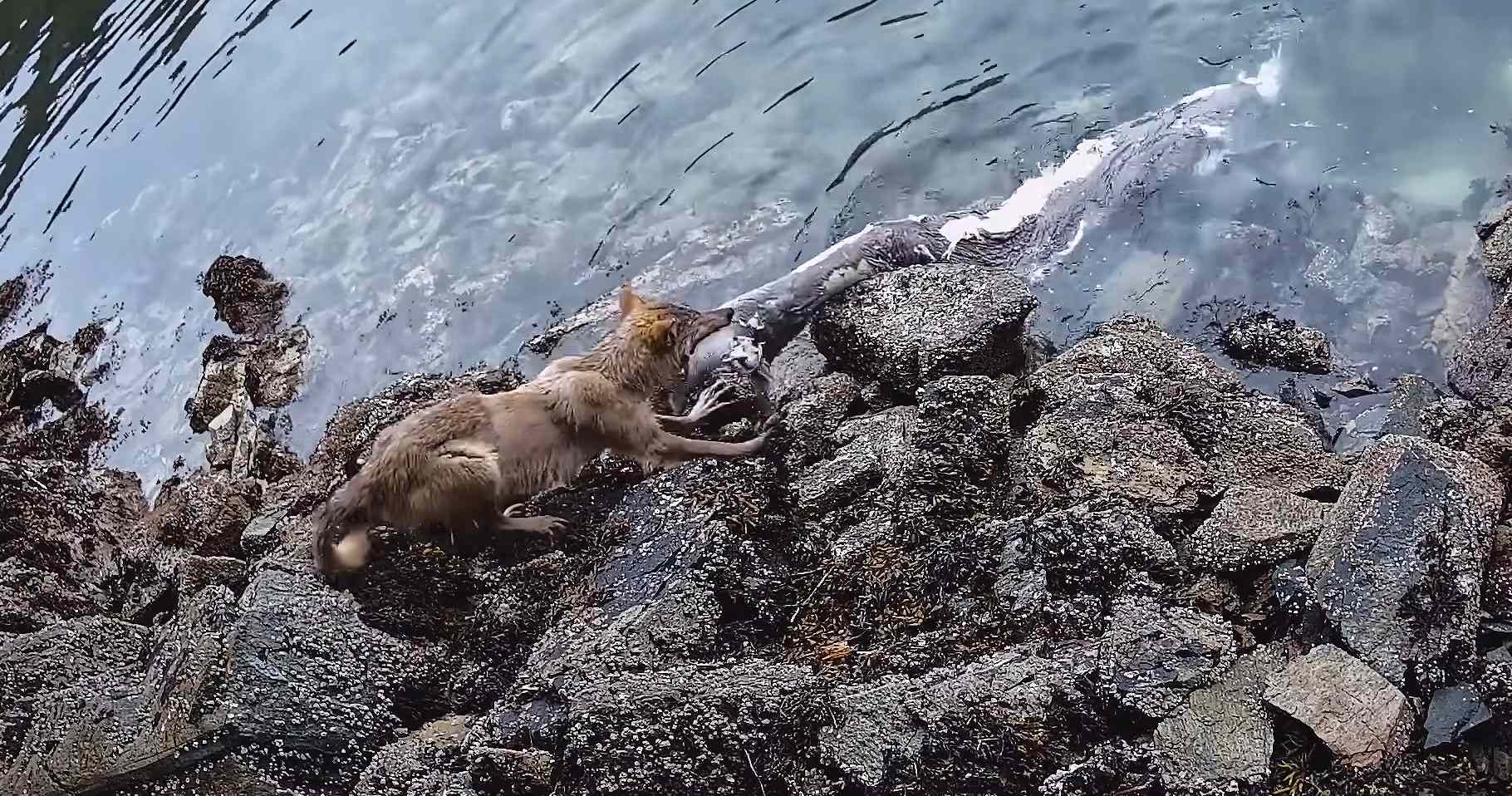
Using remote cameras positioned on beaches, we determined that black bears responded positively to herring eggs, with bears being more frequent at larger spawn events. By pairing this research with the collection of bear scats, we also found that black bears ate more eggs on beaches that experience larger spawns, with eggs being consumed by bears for over five weeks from single spawn events in Quatsino Sound, British Columbia. Black bears are not the only terrestrial and intertidal species to exploit herring; coastal wolves, songbirds, small mammals and intertidal invertebrates also directly rely on herring.
From both scientific and conservation standpoints, our research opens up entirely novel areas of enquiry. To the best of our knowledge, no scientific exploration of the relationships between Pacific herring and terrestrial ecosystems has ever been previously undertaken. Similarly, our knowledge of the ecological consequences of Pacific herring spawns to intertidal ecosystems are not currently understood in the context of a spatial subsidy. We’re still in the early stage of simply tracing out the ecological relationships – the next step is to understand the ecological consequences of herring spawns and conversely, what the loss of Pacific herring means to coastal ecosystems.
Published papers
Fox, C.H., Paul C. Paquet, T.E. Reimchen. 2018. Pacific herring spawn events influence nearshore subtidal and intertidal species. Mar Ecol Prog Ser 595:157-169. https://doi.org/10.3354/meps12539
Fox, C.H., A. Jacob, C.T. Darimont, P.C. Paquet. 2016. Pacific herring and fisheries management in Canada: A new era or repeated history? Ocean & Coastal Management. Vol 125, Pages 47-48